

OPCW releases its Fifth Report to identify the perpetrator of Chemical Weapons in Syria
The fifth report of the Secretariat of the Organization for the Prohibition of Chemical Weapons (OPCW) concludes that there is sufficient basis to believe that the Syrian Air Force was responsible for the chemical weapons attack on October 1st, 2016, in Kafr Zeita, Syrian Arab Republic. A comprehensive investigation was conducted by the Investigation and Identification Team (IIT) from March 2024 to December 2025.
Based on the analysis and verification of all information obtained, the Secretariat concludes that there is sufficient basis to believe that the Syrian Air Force dropped at least one yellow compressed gas cylinder, which landed in a cave system in the Wadi al-Aanz valley in Kafr Zeita. The cylinder struck near two ventilation shafts which close to Al Maghara Hospital. The cylinder then fell and landed near the entrance of the cave system. Upon impact, the cylinder ruptured, releasing high-pressure chlorine gas that spread throughout the Wadi al-Aanz valley, injuring 35 people and affecting dozens more.
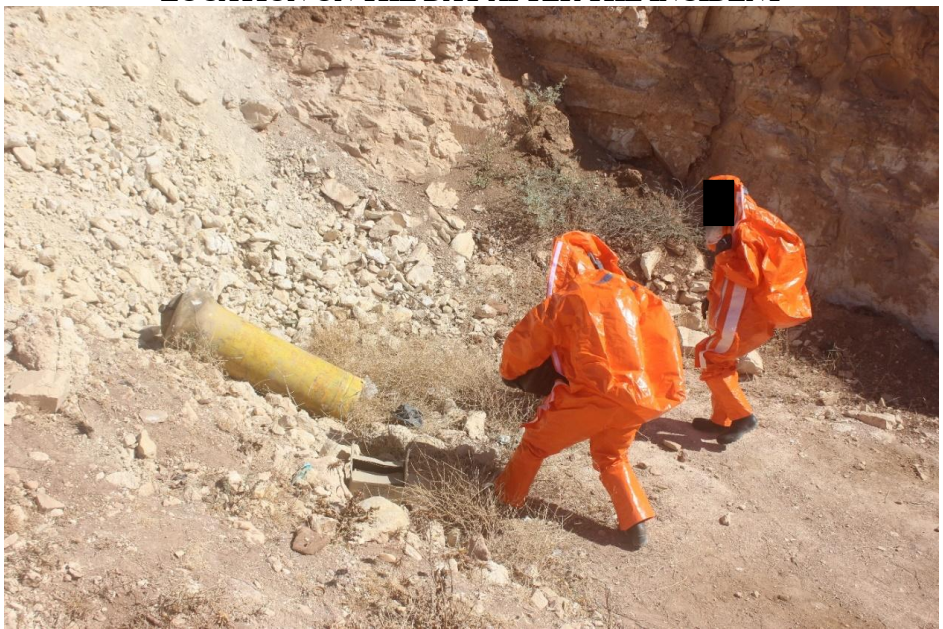
The IIT forces are investigating at the scenes
The Secretariat reached its conclusion based on the standard of evidence known as “reasonable grounds,” a standard consistently applied by investigative bodies and international commissions. The assessment included information from the Fact-Finding Mission (FFM), State Members, interviews produced by the IIT, and analyses of samples, computer models, satellite imagery, frontline maps, authenticated video and photographs, and other relevant data. This information was considered comprehensively, and OPCW procedures were strictly followed. The Secretariat also carefully considered the positions previously presented by the Syrian government but was unable to gather any concrete information to support them. Until now, the OPCW has issued five reports identifying perpetrators in seven cases of the use of toxic chemicals as weapons in Syria.
Ambassador Fernando Arias, Director-General of the OPCW, said: “We welcome the support received from the new Syrian government, marking the first cooperation of the Syrian Arab Republic with an IIT investigation. These actions are perpetrators consistent with the commitments made by President Ahmad al-Sharaa when I visited Damascus last February. This represents a significant milestone and a meaningful contribution to the international condemnation.”
“This new report provides further evidence of a systematic pattern of the Syrian regime’s use of toxic chemical weapons against its own people. The report and its findings are now in the hands of the international community, the United Nations, and the States Parties to the Chemical Weapons Convention. The Secretariat will continue its investigation to identify the perpetrators of chemical weapons use in Syria through its Office for Special Operations,” he added.
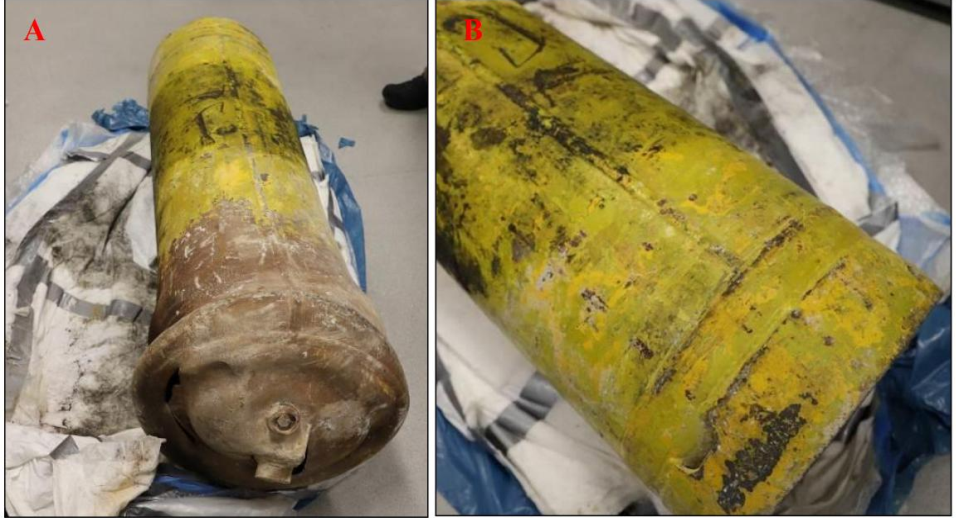
The device was used to launch a chemical attack against opposing forces
Details of the report can be found at https://www.opcw.org/media-centre/news/2026/01/opcw-releases-5th-report-identify-perpetrators-chemical-weapons-use-syria.
Although chlorine gas is a common industrial chemical and is not included in the Chemical Weapons Convention (CWC) chemical lists, Articles I and II of the CWC stipulate that any toxic chemical, if used to cause death, injury, or incapacitation of human beings, is considered a chemical weapon. Therefore, the use of chlorine gas in warfare for the purpose of harming human beings constitutes the use of a chemical weapon, which is absolutely prohibited by the CWC under all circumstances.
Tào Thuận – TT81