The FATF Recommendations: what you need to know
Unofficial translation from the Vietnamese original.
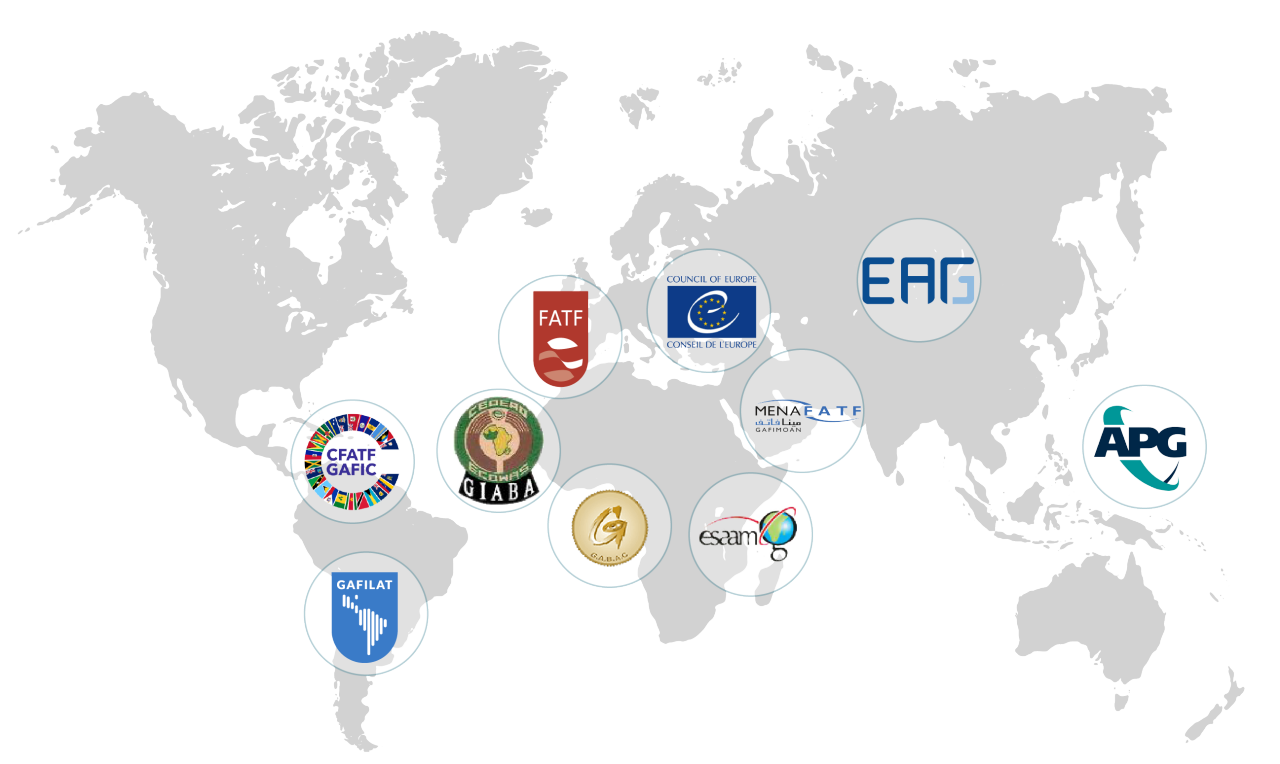
The Financial Action Task Force (FATF) is an international, intergovernmental body on combating money laundering and terrorist financing. Established in 1989, the FATF works to harmonise international anti-money laundering and countering the financing of terrorism (AML/CFT) standards across its current 38 member countries by issuing regular guidance to national financial authorities. The FATF sets out its approach to AML/CFT in its 40 Recommendations. Before new AML/CFT standards are introduced, the competent authorities of member countries and financial institutions wishing to understand and comply with FATF policy should consult these Recommendations.
The FATF Recommendations range from the implementation of international treaties to reporting and customer due diligence measures. Some of the most important recommendations are summarised below:
RECOMMENDATION 1: RISK-BASED APPROACH
The FATF recommends that countries implement a risk-based approach to AML/CFT. This means that each country should direct obliged entities to identify the level of money laundering and terrorist financing risk they face and take appropriate compliance action in response. Governments are directed to establish national supervisory authorities and regulatory mechanisms to monitor and mitigate criminal threats. The risk-based approach is considered the foundation of effective AML/CFT action and is necessary for implementing the FATF’s further recommendations. The risk-based approach is scalable: higher levels of risk require stronger compliance measures, while lower levels of risk may be met with simplified measures.
RECOMMENDATIONS 6/7/35: SANCTIONS
In order to comply with United Nations Security Council (UNSC) resolutions, the FATF recommends that member countries implement targeted financial sanctions against individuals or entities that pose risks related to terrorist financing or are involved in the proliferation and financing of weapons of mass destruction. UNSC resolutions require countries to freeze the funds and assets of designated individuals and entities without delay and not to make any further funds or assets available to them. FATF member countries establish and publish sanctions lists that financial institutions can consult before establishing business relationships with customers, such as politically exposed persons, who may pose a risk.
RECOMMENDATION 10: CUSTOMER DUE DILIGENCE
Countries should ensure that their financial institutions put in place appropriate due diligence procedures to prevent customers from opening anonymous accounts or accounts in fictitious names. These customer due diligence (CDD) measures should be applied when a financial institution establishes a new business relationship, when certain transactions occur and when there is a suspicion of money laundering or terrorist financing – or any doubt about the customer’s identity. CDD measures should be ongoing and should enable financial institutions to reliably verify customers’ identities, identify beneficial owners and clarify the nature of business relationships.
RECOMMENDATION 12: POLITICALLY EXPOSED PERSONS (PEPS)
The FATF recommends that financial institutions implement AML/CFT measures to deal with foreign politically exposed persons (PEPs) and the risks they may pose. Such measures include applying a risk-based approach to individual customers, establishing the source of wealth and funds, conducting ongoing monitoring and introducing senior management approval procedures for entering into business relationships involving PEPs. Financial institutions must be able to establish which PEPs pose a higher risk and subject those customers to more thorough screening. AML/CFT measures for PEPs should also apply to the family members and close associates of the customers concerned.
RECOMMENDATION 15: VIRTUAL ASSETS
FATF Recommendation 15 concerns New Technologies and has been supplemented by an Interpretive Note on Virtual Assets, which essentially means cryptocurrencies. The Interpretive Note sets out rules on the handling of virtual assets by both financial authorities and relevant obliged entities. This includes the recommendation that countries apply a risk-based approach to cryptocurrency policy compliance in AML/CFT, that national authorities regulate, monitor and supervise Virtual Asset Service Providers (VASPs), and that national competent authorities facilitate information sharing. The FATF also recommends that VASPs be licensed and fulfil standard AML/CFT obligations such as customer due diligence, screening, reporting and record-keeping on politically exposed persons.
In 2021, the FATF issued its Guidance on a Risk-Based Approach to Virtual Assets and Virtual Asset Service Providers, which sets out a range of key focus areas for AML/CFT compliance teams. These areas include clarifying the definition of virtual assets, guidance on the treatment of stablecoins, the licensing of VASPs and the implementation of the Travel Rule (Recommendation 16). The Guidance also sets out principles for information sharing and cooperation between VASP supervisors.
RECOMMENDATION 16: WIRE TRANSFERS
FATF Recommendation 16, also known as the Travel Rule, requires countries to collect identifying information on the originators and beneficiaries of domestic and cross-border bank transactions in order to create an appropriate AML/CFT audit trail. In practice, this involves the exchange of information between the parties whenever a transaction takes place, including sending names, physical addresses and account numbers. In 2019, the FATF updated the Travel Rule to account for the growing use of cryptocurrencies worldwide. The rule now applies to VASPs, such as cryptocurrency exchanges and wallets, and subjects them to the same information exchange requirements as conventional financial institutions in the course of digital transfers.
Following a review in 2021, the FATF extended the Travel Rule to apply to a range of new cryptocurrency products and services, including personal wallets, non-fungible tokens (NFTs) and decentralised finance (DeFi) platforms.
RECOMMENDATION 19: HIGHER-RISK COUNTRIES
Some countries present a higher risk of money laundering and terrorist financing – and these countries may be placed on the FATF’s blacklist or grey list. When doing business with individuals and entities in these countries, the FATF recommends that financial institutions apply enhanced due diligence measures. In practice, such measures include enhanced reporting and audit mechanisms, prohibiting the opening of new branches and offices or any reliance on third parties, and restricting business relationships within those countries. The FATF also suggests that member countries take measures to advise their financial institutions on the AML/CFT weaknesses of higher-risk countries.
RECOMMENDATION 20: REPORTING OF SUSPICIOUS TRANSACTIONS
This FATF Recommendation states that financial institutions should promptly report suspicious transactions to the relevant financial intelligence unit (FIU). These transactions specifically concern funds suspected of being the proceeds of criminal activity or of being used to finance terrorism. In this context, “criminal activity” refers primarily to the offence of money laundering – the criteria set out in FATF Recommendation 3. Suspicious transactions are subject to a mandatory, direct reporting obligation and must be reported regardless of the amount involved – even if the transaction is not completed.
RECOMMENDATION 24: BENEFICIAL OWNERSHIP
Under Recommendation 24, financial institutions must establish the legitimate beneficial ownership of companies and other bodies with corporate structures so that they are not misused for money laundering and terrorist financing. In March 2022, the FATF confirmed changes to Recommendation 24, introducing new requirements obliging countries to maintain adequate, accurate and up-to-date information on the beneficial ownership of legal persons. The updated standards mean that financial institutions must obtain beneficial ownership information through multiple means, and member countries must ensure that they operate public beneficial ownership registers (or a comparable mechanism) to facilitate access to such information.
Designated non-financial businesses and professions (DNFBPs) must also comply with Recommendation 24. In its guidance, the FATF identifies casinos as an important target for beneficial ownership compliance, suggesting that they must be “subject to a comprehensive regulatory and supervisory regime” to prevent criminals from becoming their owners.
DNFBP beneficial ownership compliance, particularly in casinos, remains a serious AML concern worldwide. In 2022, the Australian Senate highlighted the country’s failure to “introduce any regulation relating to DNFBPs”, pointing out that billions of dollars had been laundered through the housing market and through casinos. The United States is also focusing on compliance with DNFBP-related rules, with the FBI pursuing a fraudster who laundered thousands of dollars through a casino in Cincinnati. A casino in California was also fined 500,000 dollars for cash transaction compliance failures.
Compliance with DNFBP-related rules is also an international AML/CFT concern. The Royal United Services Institute (RUSI) has warned that North Korea is evading targeted financial sanctions by moving money through DNFBPs. Specifically, RUSI suggests that North Korea is exploiting high-value goods dealers (HVGDs), dealers in precious metals and stones (DPMS), the real estate sector and other gatekeeper professions such as lawyers and accountants to evade sanctions.
Thu Ha - Centre 81 (translation)
(Source: ComplyAdvantage)