Fifth Review Conference (RC-5)
Unofficial translation from the Vietnamese original.
From 15 to 19 May in The Hague, the Netherlands, the Fifth Review Conference (RC-5) on the implementation of the Chemical Weapons Convention (CWC) took place. The Ambassador of Vietnam to the Netherlands, Pham Viet Anh, Permanent Representative of Vietnam to the Organisation for the Prohibition of Chemical Weapons (OPCW), attended the Conference.
Since the CWC entered into force in April 1997, the OPCW has convened a Review Conference on the implementation of the CWC every five years to assess the results of implementing the CWC during each cycle.
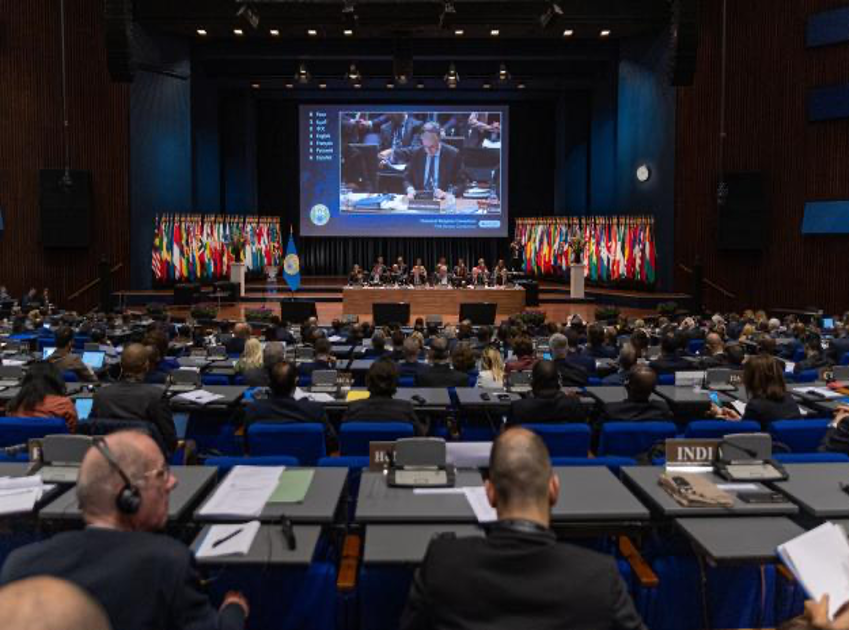
Opening of RC-5
RC-5 reviewed the implementation of the Convention and set priorities for the OPCW for the coming years. The Conference provided strategic direction for the OPCW and ensured that the OPCW has sufficient resources to achieve all its core objectives. Among the topics discussed at the Conference were the role of the OPCW and the CWC in strengthening international peace and security, including preventing the re-emergence of chemical weapons; maintaining readiness to respond to the use or threat of use of chemical weapons; developments in science and technology relevant to the implementation of the Convention; and promoting chemistry for peaceful and lawful purposes while ensuring the safe production and use of chemicals.
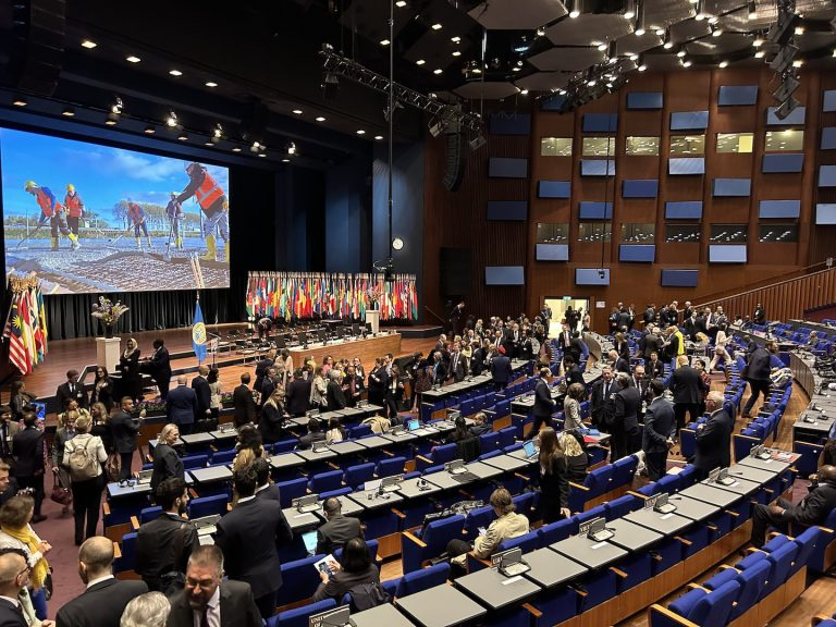
RC-5
RC-5 took place in a global geopolitical context marked by division and sharp disagreement over the implementation of the Convention between Russia, China, Iran, Syria, Cuba and Venezuela on the one hand and the Western countries led by the United States on the other; this was further aggravated by the effects of the special military operation that Russia is conducting in Ukraine, which has caused significant divisions over arms control and disarmament agreements. Meanwhile, the destruction of the chemical weapons declared by states parties is nearing completion (to date, 99% of declared chemical weapons have been destroyed; the United States is currently the only country that has not yet completed the destruction of its chemical weapons and, under the Convention’s deadline, must destroy all of its declared chemical weapons before 30 September 2023); threats of the use of chemical weapons by non-state actors and terrorist organisations are emerging; and science and technology relevant to the Convention, in both chemistry and related fields, are developing remarkably.
The Conference was attended by 800 delegates representing 137 states parties, two observer states (Israel and South Sudan), 14 international organisations and specialised agencies, 74 non-governmental organisations, research and training institutions, civil society organisations and the media.
Alongside the official conference, 27 side events were held to inform delegates in greater detail about the functions and tasks of agencies and organisations, and about how they work alongside and support the identification and destruction of chemical weapons, the inspection and verification of chemicals, and the development of the chemical industry for peaceful purposes.
At the Conference, more than 100 statements were delivered on behalf of regional groups such as the Asian Group, the African Group, the Group of Latin American and Caribbean States, the Non-Aligned Movement and China, and the ASEAN group; by representatives of international and intergovernmental organisations such as the United Nations, the European Union (EU) and the North Atlantic Treaty Organization (NATO); by specialised agencies and chemical associations; and, in particular, by states parties.
The overwhelming majority of statements affirmed the achievements in destroying declared chemical weapons and successfully establishing the ChemTech Centre, and affirmed the consensus among states parties on the necessity of the CWC and the OPCW as essential instruments for safeguarding world peace and security, even after all declared chemical weapons have been destroyed, as stated by the OPCW Director-General, Ambassador Fernando Arias, at the opening session.
However, the prominent disagreements between the United States and the West on the one hand and Russia, China and Syria on the other remained unresolved. As a result, many issues raised in the draft report concerning cases of chemical weapons use in Syria, the United Kingdom of Great Britain and Northern Ireland, Iraq, Malaysia and Russia did not achieve full consensus among states parties. Consequently, the Conference did not adopt a final report, but only a procedural report.
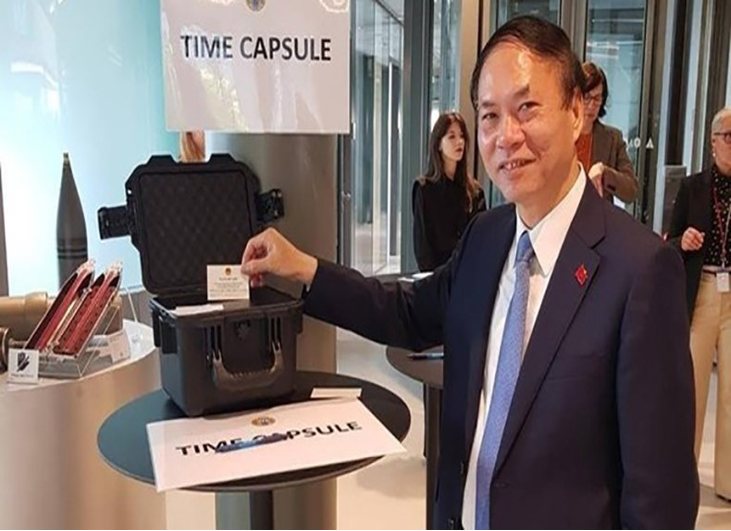
The Ambassador of Vietnam to the Netherlands, Pham Viet Anh, attends RC-5
Speaking at the Conference, Ambassador Pham Viet Anh welcomed the great achievements made by the OPCW and states parties, which have contributed to the complete destruction of declared chemical weapons, and highlighted the indispensable role of the organisation as an important instrument for maintaining security and peace for a world free of chemical weapons in particular and of weapons of mass destruction in general. He affirmed Vietnam’s commitment to implementing the CWC fully and responsibly.
On this occasion, the Vietnamese delegation proposed and called for the OPCW’s activities to strictly adhere to the functions and tasks set out in the CWC; to enhance openness, transparency and objectivity and avoid politicisation; and to strengthen cooperation and dialogue to resolve differences.
The OPCW should make full use of its functions and capabilities to ensure the legitimate rights and interests of states in developing the chemical industry safely and securely for peaceful purposes.
The OPCW should also create better conditions for drawing on human resources from developing countries, with attention to geographical balance; and Vietnam supports the idea of establishing and expanding regional centres to connect resources for implementing the Convention, including the implementation of the initiative to establish an ASEAN regional centre for building capacity to implement the CWC.
Vietnam also proposed enhancing the role of the Centre for Chemistry and Technology (ChemTech) in providing equipment and training staff for states parties, and creating more opportunities for officials from states parties, especially developing countries, to work at ChemTech.
Thuan - Centre 81