Chemical, biological, radiological and nuclear incident response exercise
Unofficial translation from the Vietnamese original.
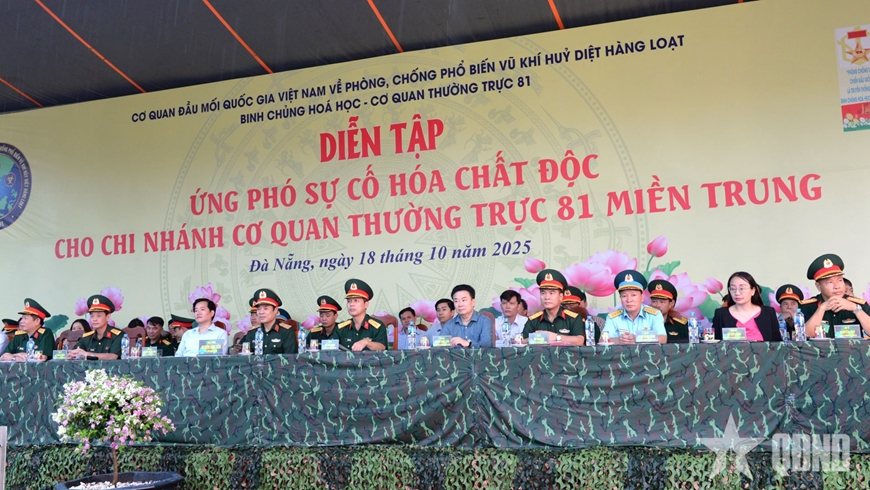
On 18 October, at the 88th Chemical Defence Brigade, the Chemical Corps – the Standing Office of Vietnam’s National Focal Point for countering the proliferation of weapons of mass destruction (Standing Office 81) – in coordination with the competent authorities, conducted the exercise “Chemical, Biological, Radiological and Nuclear Incident Response (DC-25)”.
Major General Nguyen Dinh Hien, Commander of the Chemical Corps, and Senior Colonel Le Xuan Dung, Deputy Commander and Chief of Staff of the Chemical Corps and Head of the Exercise Steering Board, attended and directed the exercise.
The exercise aimed to enhance combat readiness and the capacity to handle incidents, remediate their consequences, and protect lives, property and the environment.
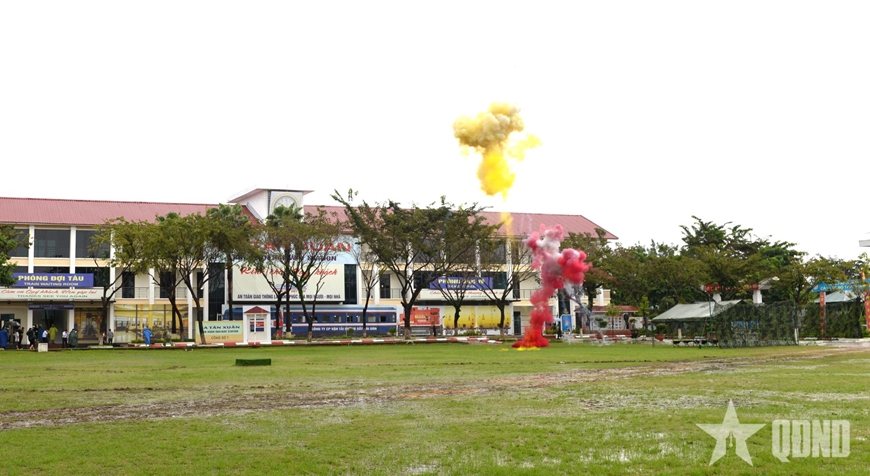
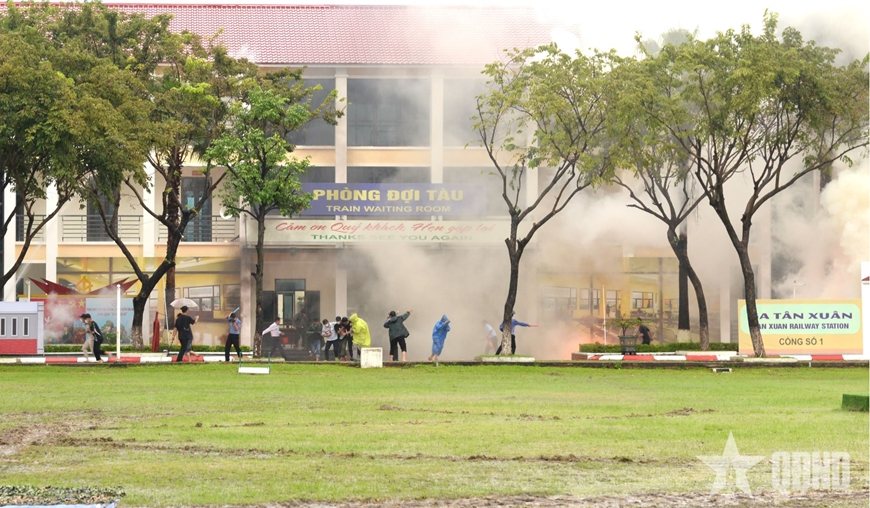
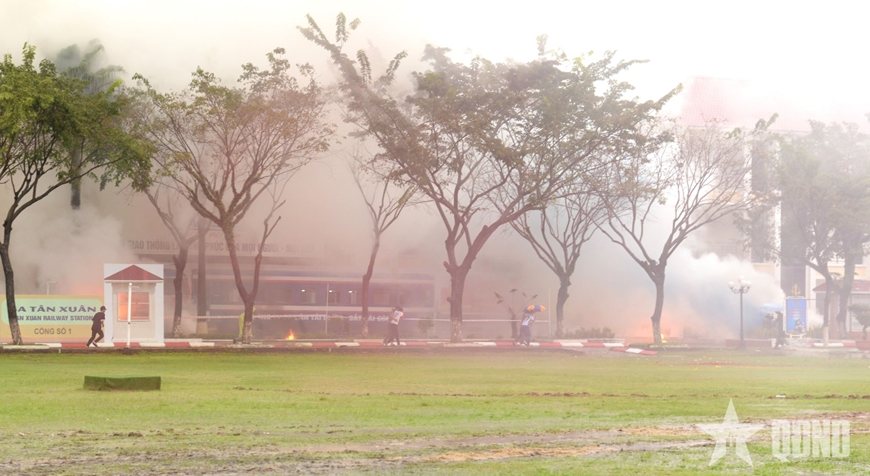
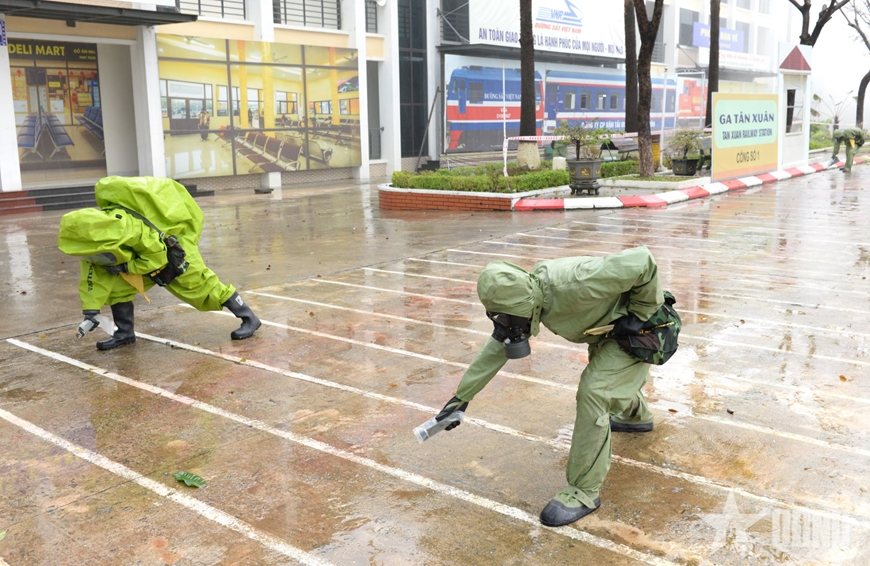
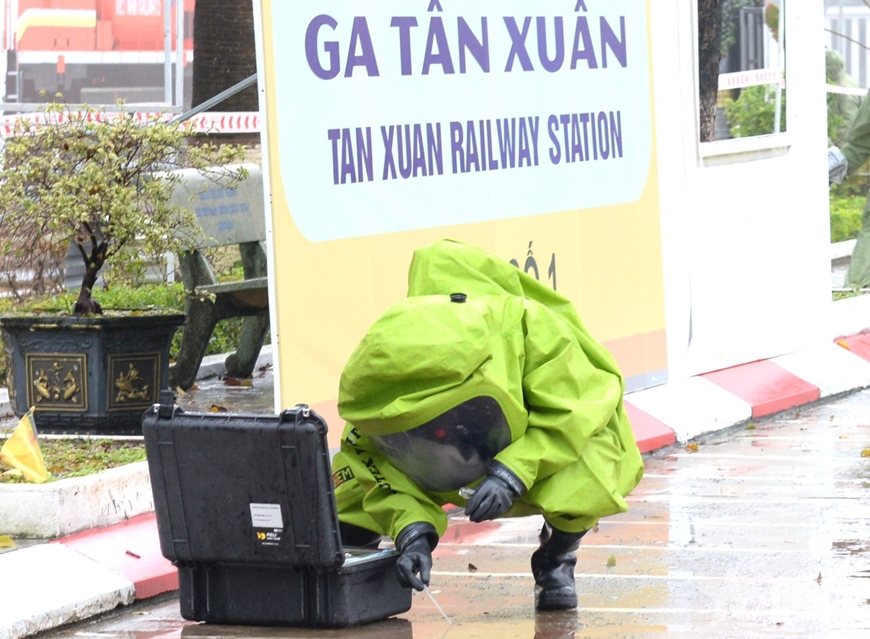
Scenario: a hazardous incident occurs when an unmanned aerial vehicle (UAV) carrying hazardous materials crashes in the area of Tan Xuan Station, releasing toxic substances over a limited area and affecting residents and infrastructure. The incident requires the mobilisation of emergency response forces, the isolation of the area and the remediation of the contaminated environment.
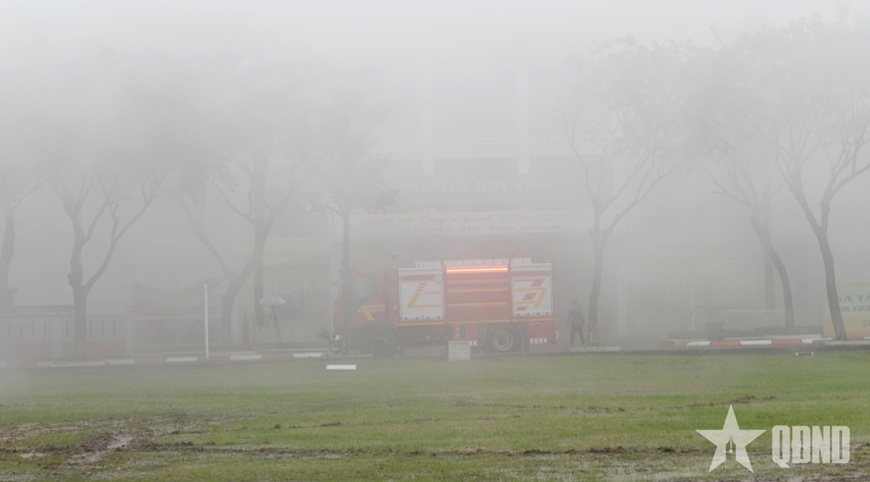
In response to the emergency, the Civil Defence Command Board of the Chemical Corps directed the National Action Centre for Toxic Chemicals and Environmental Treatment, in coordination with the competent agencies of the Ministry of National Defence, the Ministry of Public Security, the Ministry of Science and Technology and the Ministry of Agriculture and Environment, to organise forces and equipment and coordinate the handling of the incident. The 88th Chemical Defence Brigade rapidly deployed specialised forces to work jointly at the scene.
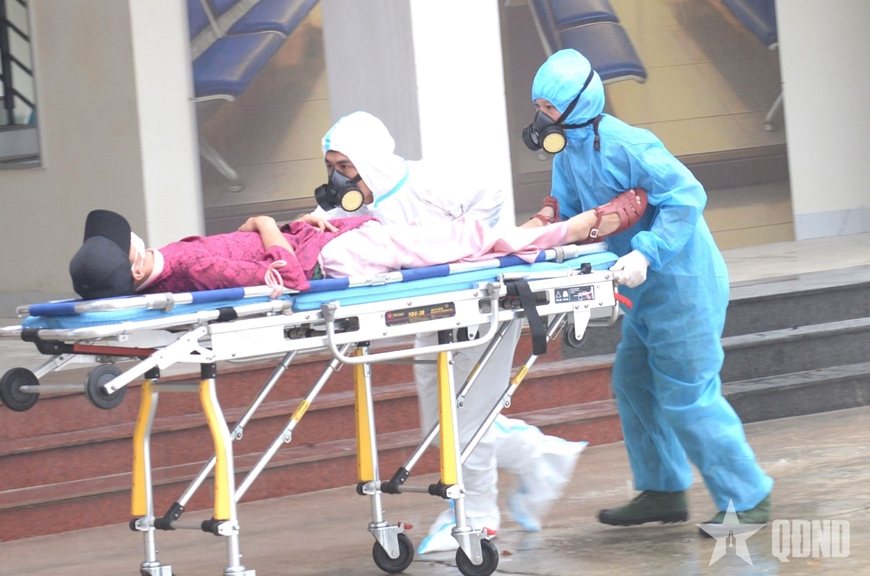
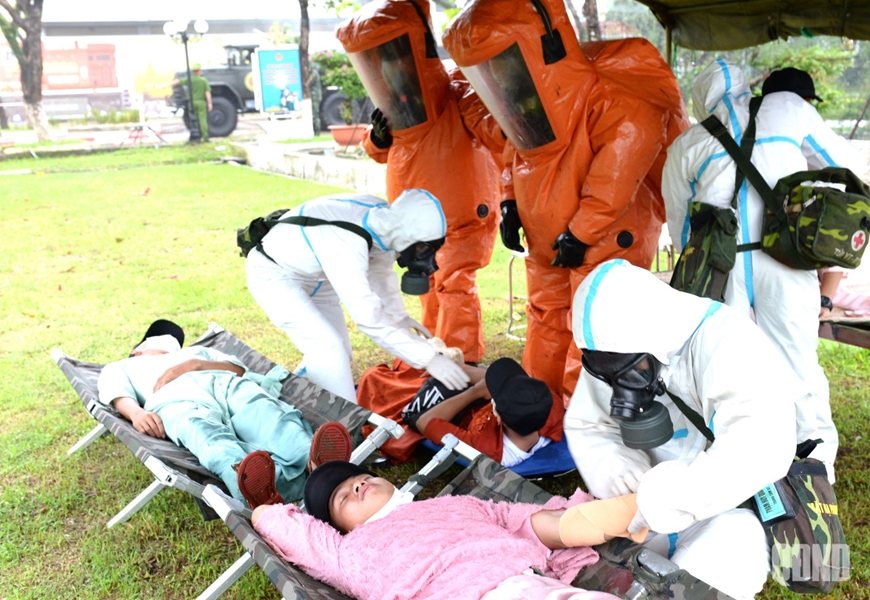
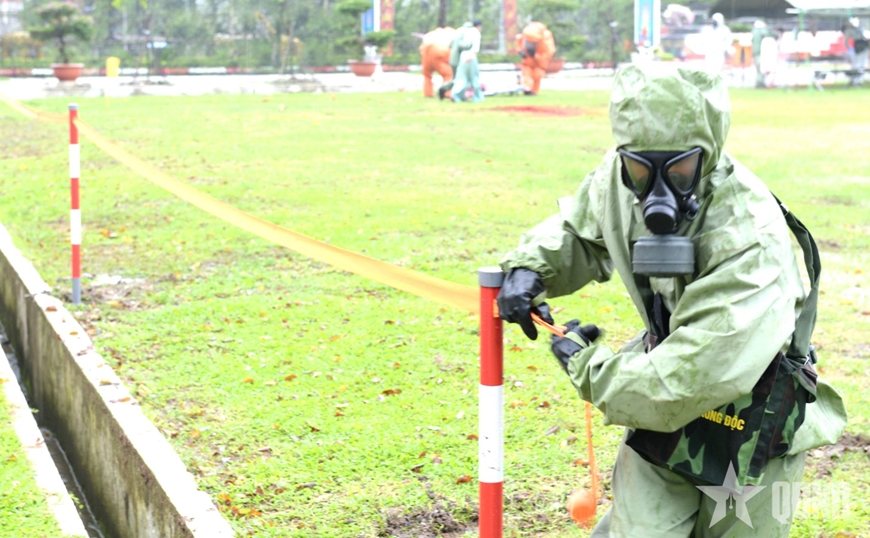
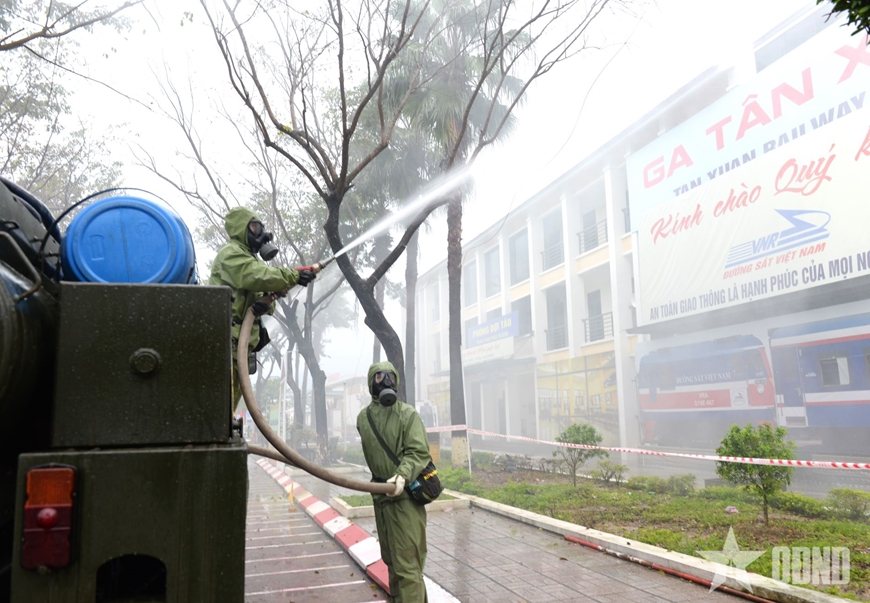
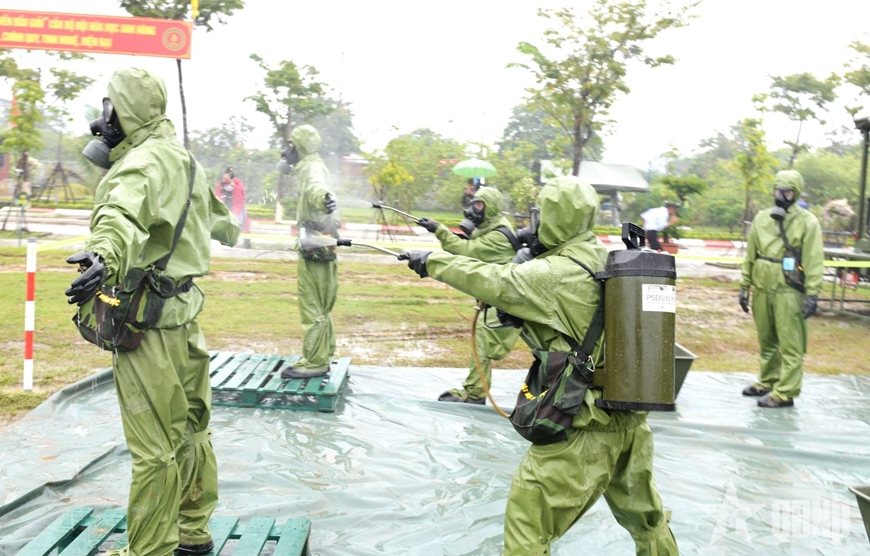
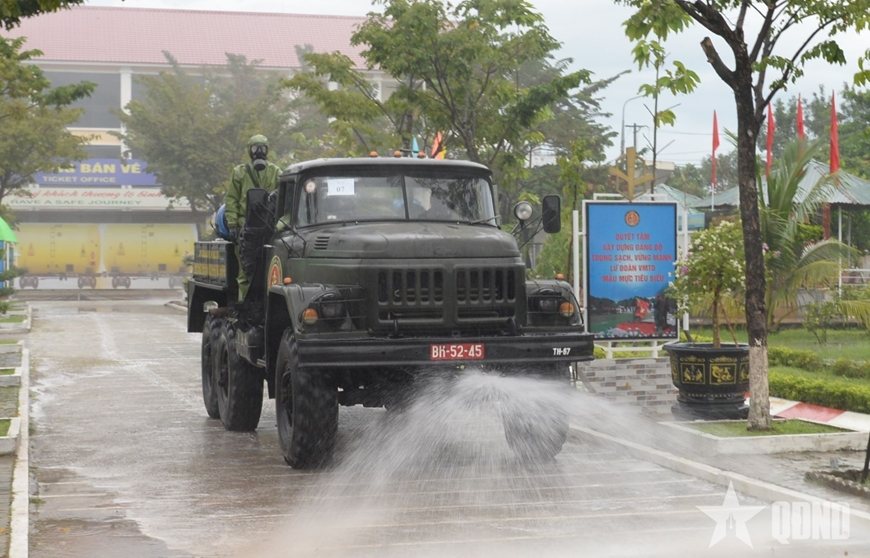
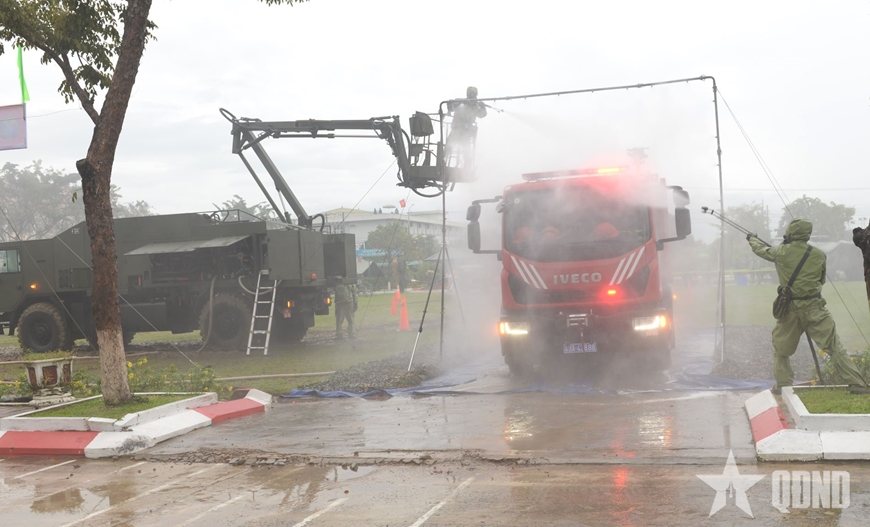
The exercise involved specialised forces for reconnaissance, rescue, medical care, toxic agent detection, decontamination, logistics, etc., which carried out tasks to remediate the consequences, decontaminate, clean up the environment and secure the incident area. The participating units applied the correct technical procedures and observed absolute safety, minimising damage to the greatest possible extent.
Besides improving inter-agency operational coordination, the exercise was also an opportunity to test the capacity for organisation, command and the use of existing equipment, while providing practical training in conditions close to those of real missions. Through this activity, the forces were able to familiarise themselves with, operate and make effective use of new technical equipment, improving their mastery of science and technology and meeting mission requirements in the new situation.
Through the exercise, the participating forces gained a firm grasp of procedures and strengthened their coordination, command and control skills, while laying the basis for improving inter-agency mechanisms and adjusting training content accordingly, contributing to readiness to respond to and remediate chemical, biological, radiological and nuclear incidents in all circumstances.
A reporter from the People’s Army Newspaper Online captured some images of the exercise “Chemical, Biological, Radiological and Nuclear Incident Response (DC-25)”.
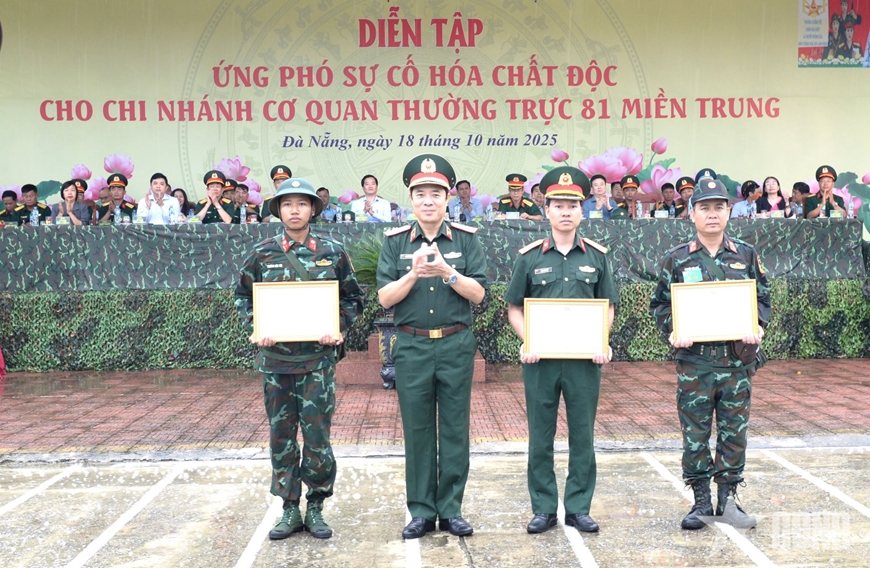
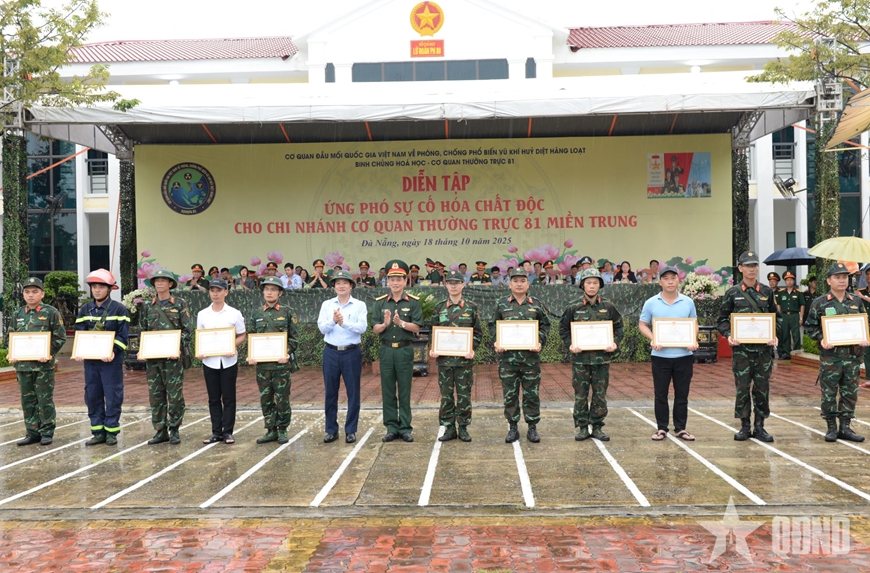
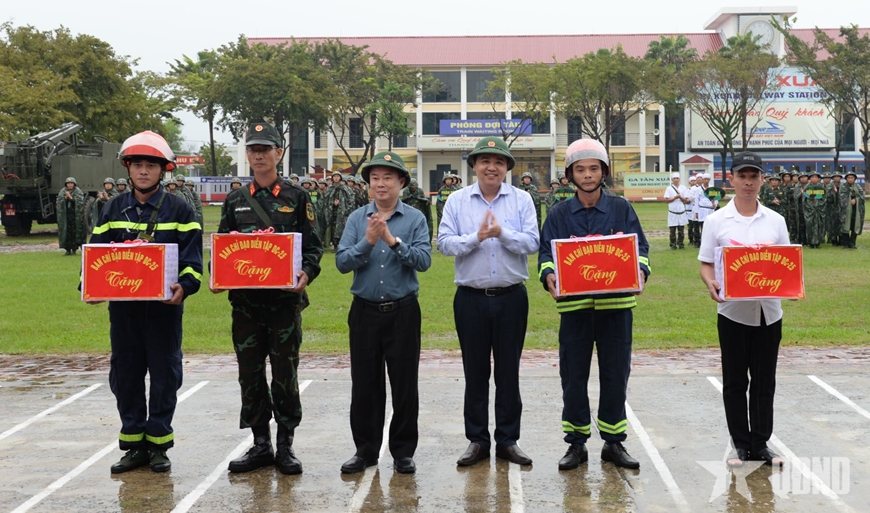
Awards are presented to units and individuals for outstanding performance.
Source: People’s Army Newspaper (QDND)