Deputy Prime Minister and Minister of National Defence Phan Van Giang on the draft Law on Countering the Proliferation of Weapons of Mass Destruction
Unofficial translation from the Vietnamese original.

On the morning of 16 July, continuing its 4th session, the National Assembly Standing Committee gave its opinions on the draft Law on Countering the Proliferation of Weapons of Mass Destruction.
A framework law proposed, with no major additional demand for financial resources
Presenting the Submission, Deputy Prime Minister and Minister of National Defence Phan Van Giang stated that developing the Law on Countering the Proliferation of Weapons of Mass Destruction is an urgent requirement in order to institutionalise the Party's policy on safeguarding the Fatherland early and from afar, while meeting the international commitments and the resolutions of the United Nations Security Council that Vietnam is responsible for implementing.
The draft Law consists of 4 chapters and 37 articles, setting out the principles, policies, measures, resources and responsibilities of agencies, organisations and individuals in countering the proliferation of weapons of mass destruction.

Deputy Prime Minister and Minister of National Defence Phan Van Giang.
According to the Deputy Prime Minister and Minister of National Defence, the draft Law has been developed by institutionalising the 3 policies approved by the Government, carrying over the still-appropriate provisions of current legislation and remedying shortcomings in countering the proliferation of weapons of mass destruction. At the same time, it adds new provisions to meet the requirements of implementing international treaties, United Nations Security Council resolutions and relevant international standards. The content of the draft Law has also been reviewed and designed to ensure consistency and coherence with legislation on national defence, security, counter-terrorism, anti-money laundering, chemicals, atomic energy, foreign trade management, customs, science and technology, as well as other relevant specialised areas of law.
The draft Law has been designed as a framework law, regulating only fundamental, long-term and stable matters within the competence of the National Assembly; it does not codify in-depth technical and professional content that changes frequently, but assigns the Government and competent authorities to provide detailed regulations, so as to ensure flexibility, feasibility and conformity with practice and the relevant international commitments.
Notably, the draft Law aims to simplify procedures by integrating the provision, use and sharing of information with the existing databases and information systems of ministries, sectors and localities, making greater use of electronic means, applying a priority mechanism and simplifying inspection and supervision methods for organisations and enterprises with sound internal compliance programmes.
The Government also affirmed that implementation of the Law will basically draw on the existing apparatus, personnel, facilities and data systems, and will therefore not generate a major demand for financial resources. The draft Law is expected to be submitted to the National Assembly for consideration and adoption under the shortened procedure at the extraordinary session in August 2026.
Clarification sought on the control mechanism for dual-use goods, avoiding overlapping management
Presenting the Verification Report, Le Tan Toi, Chairman of the Committee for National Defence, Security and Foreign Affairs, stated that the verifying agency basically agreed with the content of the draft Law, but recommended further refinement of many provisions to ensure feasibility.
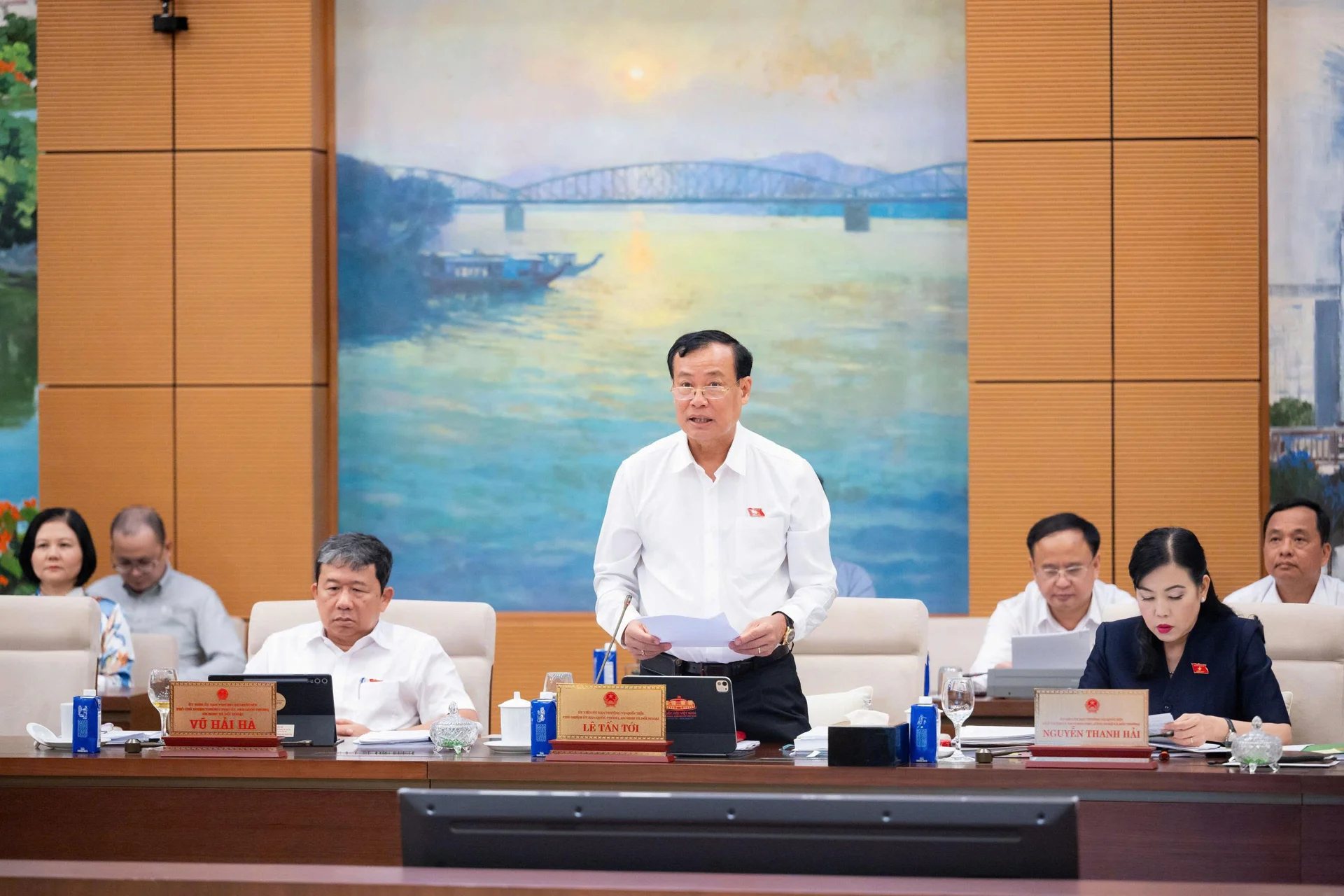
Le Tan Toi, Chairman of the Committee for National Defence, Security and Foreign Affairs.
In particular, the Committee recommended further clarifying the scope and new concepts such as "end user", "dual-use goods and technologies" and "beneficial owner"; specifying the criteria for the national risk assessment; and clearly setting out the mechanism for developing control lists, the responsibilities for data sharing among agencies and the method for managing items not on the control lists.
The verifying agency also recommended further refining the provisions on suspicious transactions related to the financing of the proliferation of weapons of mass destruction, ensuring close coordination among the competent authorities, and designing the database so that it connects with existing national data systems in order to avoid duplicate investment.
Speaking at the session, Chairman of the National Assembly Tran Thanh Man commended the Ministry of National Defence for proactively elevating the legal framework from Decree 81/2019 to a law.
According to the Chairman of the National Assembly, this is not only a law on national defence and security; it also helps enhance the country's standing, meet international standards on anti-money laundering and countering the financing of terrorism, and build the confidence of foreign investors.
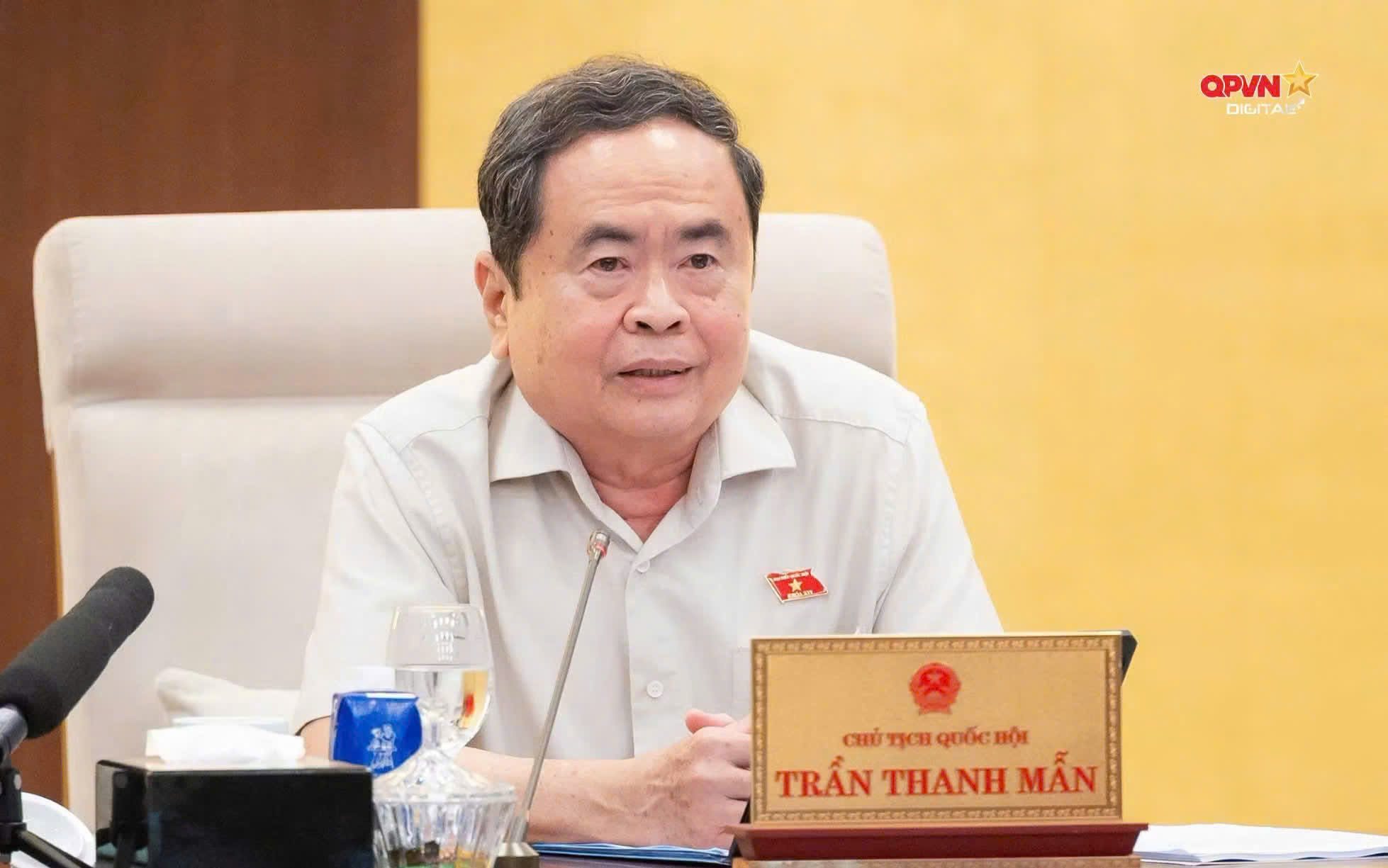
Chairman of the National Assembly Tran Thanh Man
The Chairman of the National Assembly particularly stressed the need to thoroughly resolve the overlaps in the management of dual-use goods - goods that serve civilian purposes but can also be used to manufacture weapons of mass destruction. In his view, management of this area is currently fragmented across many ministries and sectors, requiring enterprises to complete many different procedures.
He proposed studying the development of a unified national list of dual-use goods and introducing an electronic "single window" mechanism for the entire licensing, declaration and appraisal process; at the same time, he called for refining the provisions on asset freezing, exemption from legal liability for credit institutions acting in accordance with the regulations, protection of the rights of bona fide third parties, and the addition of mechanisms for emergency response and inter-agency exercises among the forces concerned.
According to the Chairman of the National Assembly, once promulgated, the Law will demonstrate Vietnam's commitment to fulfilling its international obligations, contributing to a safe and transparent investment environment, reducing the risk of being placed on international monitoring lists, and creating conditions for attracting high-technology, semiconductor and new energy projects.