Nuclear disarmament amid complex global developments
Unofficial translation from the Vietnamese original.
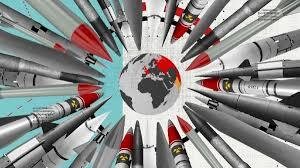
As we enter the twenty-first century, the vision of an ideal world free of nuclear weapons is becoming increasingly remote as political and military turbulence around the world escalates. Recent events have exacerbated tensions and heightened the threat of nuclear annihilation for all humankind. Notably, in February 2023, Russian President Vladimir Putin announced the suspension of Russia’s participation in the New Strategic Arms Reduction Treaty (New START), the last remaining nuclear arms control agreement. This provoked a strong reaction from the United States, which stopped exchanging information on its nuclear forces. Such developments have made the world more sceptical about a future without nuclear weapons and have raised questions about the effectiveness of arms limitation treaties such as the Treaty on the Non-Proliferation of Nuclear Weapons (NPT) and the Outer Space Treaty (OST).
Rose Gottemoeller, the chief negotiator of New START, has warned that the failure of the Treaty between the world’s two nuclear superpowers shows that the world is escalating into another nuclear arms race. As of early 2023, some 12,500 warheads remained in the possession of nine countries, leaving the prospect of future nuclear disarmament uncertain.
The road to disarmament appears to be beset by countless obstacles. In 2019, the United States withdrew from the Intermediate-Range Nuclear Forces Treaty (signed in 1987 between the Soviet Union and the United States to phase out ballistic missiles, cruise missiles and shorter-range missiles between the two countries), and then in 2020 the United States also withdrew from the Treaty on Open Skies (a multilateral treaty signed in 1992 by 35 states parties to conduct unarmed reconnaissance flights, monitor airspace and openly gather information on each other’s military forces and activities). This dealt a heavy blow to the process of completely eliminating nuclear missiles. Likewise, recent developments in Russia’s deployment of tactical nuclear weapons in Belarus have revived fears of nuclear conflict, prompting the United Nations to warn that the risk of nuclear weapons being used is now higher than at any time since the Cold War.
The situation is further complicated by the growing nuclear arsenals of states such as Israel, which is expanding its nuclear facilities and intends to arm its submarines with nuclear weapons. This has raised concerns about the possibility of nuclear conflict in the Middle East. Similarly, the DPRK’s advances in acquiring nuclear weapons and its readiness to use nuclear weapons pre-emptively are also worrying. Such actions by both Israel and the DPRK have hindered disarmament efforts.
Furthermore, China’s recent complaint at the United Nations about the AUKUS agreement highlighted a loophole in the NPT, as according to China, the Treaty does not permit the transfer of fissile material and nuclear technology from a nuclear-weapon state to a non-nuclear-weapon state. This has led to a host of concerns about discrimination and the peaceful use of nuclear energy.
A similar trend is evident in South Asia, where Pakistan is particularly concerned about India’s growing nuclear arsenal. India has signed agreements such as the India–US 123 Agreement, concerning the procurement of enriched uranium and trade in nuclear components with the United States. This agreement marked a departure from NPT policy.
Moreover, India has continuously strengthened its nuclear capabilities. In 2021 it conducted tests of the Agni-Prime (Agni-P) missile, followed in 2022 by a test of the Agni-V, a land-based intercontinental ballistic missile (ICBM) capable of carrying nuclear warheads. India’s nuclear triad, which allows nuclear weapons to be launched from land, air and sea, is firmly operational. Furthermore, India has acquired advanced weapon systems such as the S-400 defence system and long-range submarine-launched ballistic missiles, indicating a widening trend of weapons proliferation and raising questions about the effectiveness of nuclear non-proliferation regimes.
By contrast, Pakistan has been proactive in efforts to prevent nuclear proliferation in South Asia. Pakistan previously proposed a Strategic Restraint Regime (SRR) comprising three key elements: nuclear and missile restraint, maintenance of a conventional balance, and strengthening of conflict resolution. Pakistan’s Permanent Representative to the United Nations has repeatedly reiterated that Pakistan’s SRR proposal is intended to promote peace and stability in the region. Given the growing threat from India, the SRR would effectively limit weapons proliferation. Certainly, Pakistan should continue to demonstrate its commitment and constructive role towards nuclear non-proliferation in South Asia.
Overall, the complex geopolitical situation poses a “risk” of an arms race, with the potential for weapons proliferation in both number and type. Mearsheimer, a professor of international relations at the University of Chicago (United States), has clearly pointed out that core changes in the global order are forcing states to adopt pre-emptive offensive measures to protect their interests. The shadow of “uncertainty” hangs over the world as ongoing events, escalation and provocative actions spark a new arms race. At this critical juncture, diplomatic engagement, cooperative initiatives and confidence-building measures must be given top priority to prevent further escalation. The challenges ahead are many, but they do not prevent the world from seeking viable solutions.
Thanh Tung - Centre 81