Russia’s nuclear weapons: capabilities and development directions
Unofficial translation from the Vietnamese original.
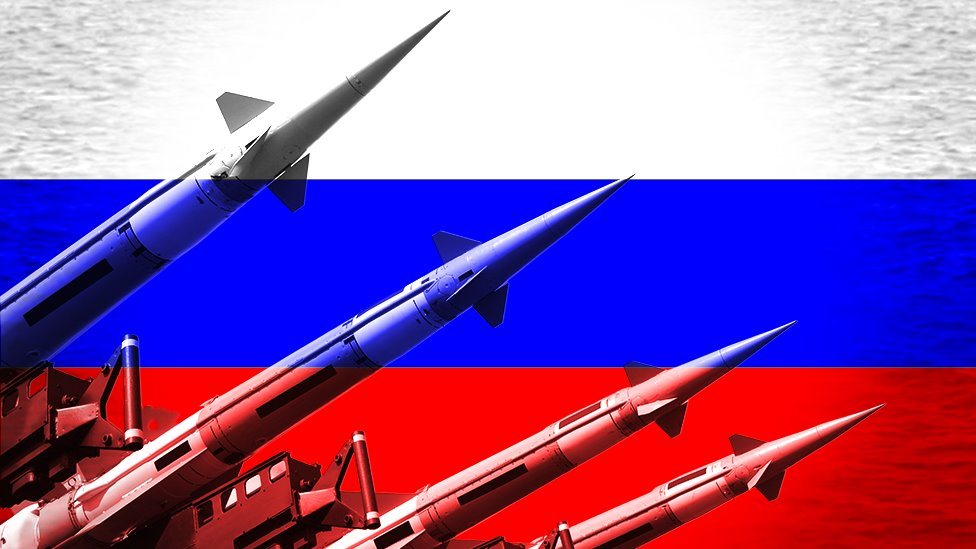
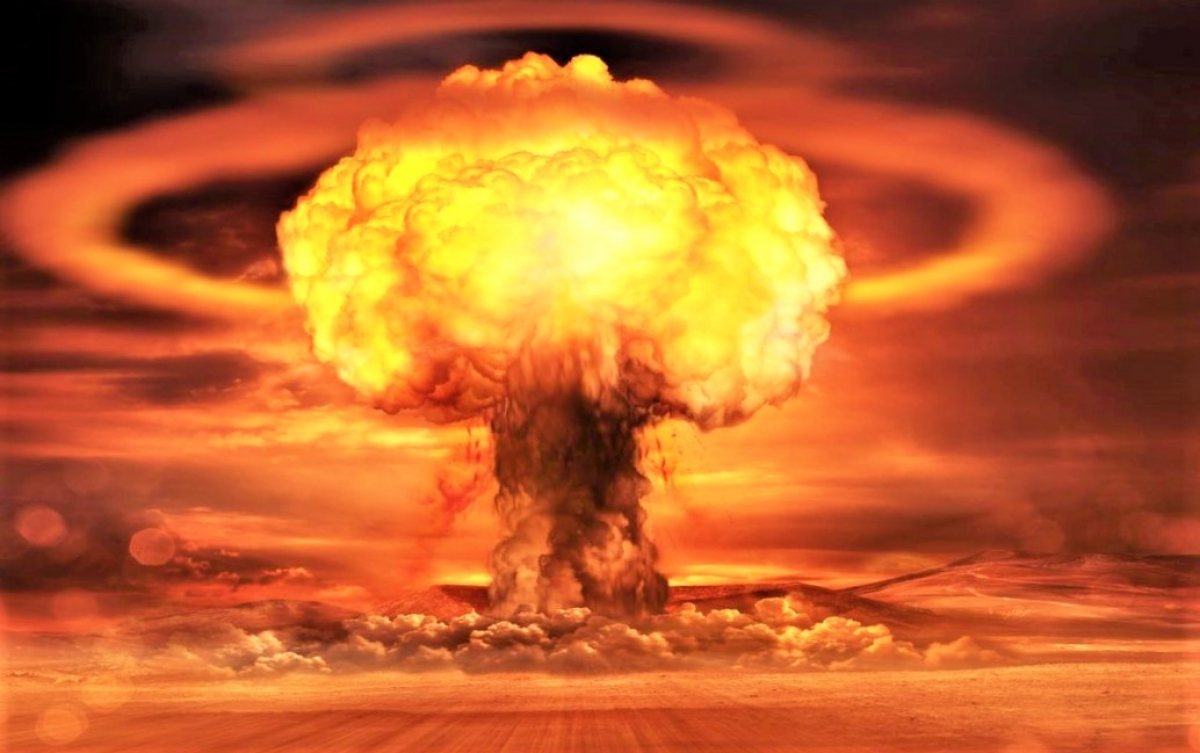
Nuclear weapons are one of the types of weapons of mass destruction, alongside chemical and biological weapons. Their energy is produced by nuclear fission or fusion reactions. Even the smallest nuclear weapon has greater destructive power than any conventional weapon. With a destructive power equivalent to 30,000–300,000 tonnes of explosives, it can completely destroy a city. Today, the destructive power of some bombs reaches millions of tonnes and can devastate an area with a radius of 100–160 km.
On 29 August 1949, the Soviet Union successfully tested an atomic bomb, breaking the US monopoly on nuclear weapons. This opened a new era in the arms race and at the same time gave rise to a new field of military confrontation: military confrontation in the nuclear domain. After the collapse of the Soviet Union, Russia inherited the vast nuclear arsenal left by the Soviet Union and continued research and development, both in the size of its stockpile and in new types of nuclear weapons. Recently, although economic sanctions have partly undermined the country’s efforts to modernise its armed forces, Moscow still maintains a wide range of weapons, including a huge nuclear arsenal.
Russia is in the midst of a decade-long modernisation of its strategic and non-strategic nuclear forces, aimed at replacing Soviet-era weapons with newer systems. President Vladimir Putin announced in December 2020 that modern weapons and equipment now made up 86 per cent of Russia’s nuclear triad, up 4 per cent on the previous year (82 per cent). He also noted that he expected this figure to rise to 88.3 per cent in 2021. As in previous years, Mr Putin’s remarks emphasised the need for Russia’s nuclear forces to keep pace with Russia’s competitors: “Standing still is absolutely unacceptable today. The pace of change in all key areas of the Armed Forces is extraordinarily high. It is not even ‘Formula 1’, it is cosmic speed. Stopping for even a second means falling behind the times.” The Military Doctrine of the Russian Federation, approved by Decree of the President of the Russian Federation of 5 February 2010, states: “The Russian Federation reserves the right to use nuclear weapons in response to the use of nuclear and other types of weapons of mass destruction against it and (or) its allies, as well as in the event of aggression against the Russian Federation involving the use of conventional weapons when the very existence of the state is under threat.”
It is estimated that at the beginning of 2021 Russia had a stockpile of approximately 4,460 nuclear warheads assigned for use by long-range strategic launchers and shorter-range tactical nuclear forces. This is slightly higher than the previous year, owing to the commissioning of the fourth Borey-class nuclear-powered ballistic missile submarine (SSBN) and an increase in the number of non-strategic warheads. At the same time, Russia upgraded its strategic bombers to better match the number of operational bombers. Of the stockpiled warheads, approximately 1,630 strategic warheads are deployed: just over 800 on land-based ballistic missiles, about 624 on submarine-launched ballistic missiles and 200 at heavy bomber bases. A further 920 strategic warheads are in storage, as are some 1,910 non-strategic warheads. In addition to the military stockpile for operational forces, a large number – approximately 1,760 – of retired but still largely intact warheads await dismantlement, bringing the total inventory to approximately 6,220 warheads.
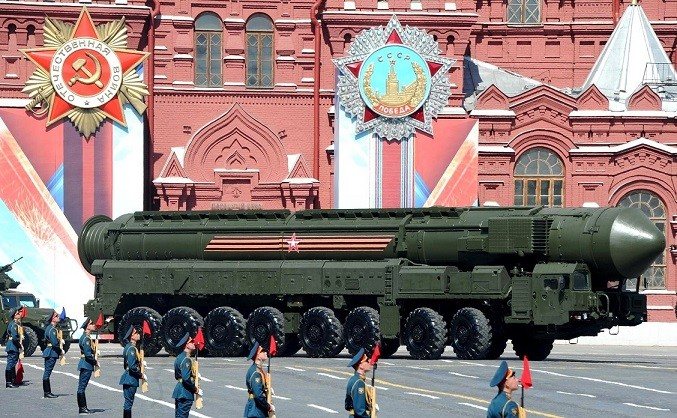
Russia’s Strategic Nuclear Forces (SNF) are structured as a nuclear triad, comprising a land component (RVSN), a sea component (SSBNs of the Navy) and an air component (strategic bombers of the Air Force). The main emphasis is on the deployment of ground-based missile systems, including the unique Topol mobile ground-based missile system.
According to open sources, the Strategic Missile Forces (RVSN) have 385 launchers with ICBMs. These include 68 heavy R-36MUTTKh and R-36M2 (SS-18) missiles, 72 UR-100NUTTKh (SS-19) missiles, 180 mobile RT-2PM (SS-25) missiles, 50 silo-based RT-2PM2 (SS-27) missiles and 15 mobile missiles.
The Navy has 12 strategic missile submarines (SSBNs), of which 7 belong to Project 667BDRM Dolphin (one under repair and another being re-equipped) and 5 to Project 667BDR Kalmar. Strategic aviation has 77 heavy bombers (14 Tu-160 and 63 Tu-95MS).
According to the International Commission on Nuclear Non-proliferation and Disarmament (ICNND), Russia has approximately 2,000 tactical nuclear weapons.
| Type Designation | Russian designation | Launchers | Year deployed | Warheads Yield (kilotons) | Total warheads |
| Strategic offensive weapons | |||||
| Intercontinental ballistic missiles (ICBM) | |||||
| SS-18 M6 Satan | RS-20V | 46 | 1988 | 10 x 500/800 | 460 |
| SS-19 M3 Stiletto | RS-18 UR-100NUTTH | 0 | 1980 | 6 x 400 | 0 |
| SS-19 M4 | Vanguard | 4 | 2019 | 1 | 4 |
| SS-25 Sickle | RS-12M Topol | 27 | 1988 | 1 x 800 | 27 |
| SS-27 Mod 1 (mobile) | RS-12M1 Topol-M | 18 | 2006 | 1 x 800 | 18 |
| SS-27 Mod 1 | RS-12M2 Topol-M | 60 | 1997 | 1 x 800 | 60 |
| SS-27 Mod 2 (mobile) | RS-24 Yars | 135 | 2010 | 4 x 100 | 540 |
| SS-27 Mod 2 | RS-24 Yars | 20 | 2014 | 4 x 100 | 80 |
| SS-X-29 | RS-28 Sarmat | - | (2022) | 10 x 500 | - |
| Total | 310 | 1189 | |||
| Submarine-launched ballistic missiles (SLBM) | |||||
| SS-N-18 M1 Stingray | RSM-50 | 16 | 1978 | 3 x 50 | 48 |
| SS-N-23 M1 | RSM-54 (Sineva) | 96 | 2007 | 4 x 100 | 384 |
| SS-N-32 | RSM-56 (Bulava) | 64 | 2014 | 6 x 100 | 384 |
| Total | 176 | 816 | |||
| Strategic bombers | |||||
| Bear-H6 / 16 | Tu-95 MS6 / MS16 / MSM | 55 | 1984/2015 | 6-16 x AS-15A or 14 x AS-23B | 448 |
| Tu-160 / M | 13 | 1987/2021 | 12 x AS-15B bombs or AS-23B | 132 | |
| Total | 68 | 580 | |||
| Total strategic weapons | 554 | 2585 | |||
| Defensive and non-strategic (tactical) weapons | |||||
| ABM / Air defence / DBK | |||||
| SA-20 / SA-21 | S-300 / S-400 | 750 | 1992/2007 | 1 | ~ 290 |
| Gazelle | 53T6 | 68 | 1986 | 1 x 10 | 68 |
| SSC-1B Sepal | Reserve | 8 | 1973 | 1 x 350 | 4 |
| SSC-5 Stooge (SS-N-26) | K-300P / 3M-55 | 60 | 2015 | (1 x 10) | 25 |
| Aviation | |||||
| Bombers / fighter aircraft | Tu-22M3 / Su-24M / Su-34 / MiG-31K | ~ 300 | 1974-2018 | air-to-surface missiles, bombs ASM, ALBM, | ~ 500 |
| Operational-tactical missiles | |||||
| SS-26 Stone | RZZ 9K720, Iskander-M | 144 | 2005 | 1 x 10 | 70 |
| SSC-7 Southpaw | KRNB 9M728 | ||||
| KRNB 9M729 | 20 | 2017 | 1 x 100 | 20 | |
| Fleet | |||||
| Submarines / naval aviation / surface ships | COMB , SLCM , PLO , RZV , GB , torpedoes | ~ 935 | |||
| Total defensive and non-strategic weapons | ~ 1912 | ||||
| Total | ~ 4497 | ||||
Land-based nuclear forces
The land-based nuclear forces are currently a branch of the Armed Forces of the Russian Federation, subordinate to the General Staff of the Armed Forces of the Russian Federation. The land-based nuclear forces were converted from a service branch by decree of the President of the Russian Federation of 24 March 2001. The Commander of the land-based nuclear forces is Lieutenant General Sergey Viktorovich Karakaev, appointed to this post by decree of the President of the Russian Federation of 22 June 2010.
According to statements by the Russian leadership, by 2020 more than 80 per cent of the Strategic Missile Forces had been equipped with modern missile systems. Russia’s newest ICBM, the RT-2PM2, is deployed in both silo-based and road-mobile versions. On the basis of this ICBM, a modification, the RS-24 Yars, has been developed and fitted with a multiple re-entry vehicle. Given that the service life of these missiles is at least 20 years and that deliveries amount to 7 missiles per year, the US Congressional Research Service assumed that by 2017 the Strategic Missile Forces would have 87 RT-2PM2 ICBMs, of which 60 would be deployed in the silo-based variant and 27 in the mobile version. As for the RS-24 ICBM, which according to unverified data can carry more than 4 independently targetable warheads, it is forecast that about 85 missiles of this type will be on combat duty within 10 years. The RT-2PM ICBMs are likely to remain on combat duty until the end of their service life, i.e. about 25 years.
The service life of the R-36M2 “Voevoda” ICBM is also planned to be extended to 30 years. According to some experts, in 2017 only 20 missiles of this type remained on combat duty. As a replacement, a new liquid-propellant ICBM with similar performance characteristics may be developed.
SSBN sea-based nuclear forces
The naval strategic nuclear forces (SSBNs) are part of the Navy. Since 5 May 2012, the post of Commander-in-Chief of the Navy has been held by Admiral Viktor Viktorovich Chirkov. The NSNF are equipped with 12 warships carrying nuclear missile weapons. Seven belong to Project 667BDRM “Dolphin”; they are armed with R-29RM SLBMs and are based on the Kola Peninsula. The remaining five, armed with R-29R SLBMs, belong to the older Project 667BDR Kalmar. The Russian Navy also includes one Project 941UM Typhoon missile submarine, upgraded for flight design tests of the new R-30 SLBM.
By 2017, the Kalmar-class SSBNs will have reached the end of their service life, so they are planned to be replaced by new Borey-class SSBNs armed with the R-30 Bulava SLBM. It should be noted that the Borey project is still far from completion. The first submarine of this project, the Yuri Dolgoruky, was under construction for more than 10 years and is only now undergoing trials. The launch date of the second missile submarine of this project, the Alexander Nevsky, has been postponed several times. The third missile submarine, the “Vladimir Monomakh”, was ready in 2012. Construction of the fourth missile submarine, the “Saint Nicholas”, has only just begun. In addition, in connection with a number of unsuccessful test launches of the R-30 SLBM, the prospects of arming these SSBNs with the Bulava missile system are currently not entirely clear. At present, a large-scale modernisation programme for the Dolphin-class SSBNs is being completed. In the course of modernisation, these missile submarines are being re-equipped with new R-29RMU2 Sineva SLBMs. The submarines “Bryansk”, “Tula”, “Yekaterinburg” and “Karelia” of this project have already been re-equipped. Re-equipment work on the fifth submarine of this project, the SSBN “Novomoskovsk”, began in 2009. It can be said that the re-equipment of the Delfin-class SSBNs with the R-29RMU2 Sineva SLBM will be completed in the near future.
Long-range aviation nuclear forces
The strategic bomber nuclear forces of the Russian Armed Forces belong to the 37th Air Army of the Supreme High Command. The Commander of the forces, Major General Anatoly Dmitrievich Zhikharev, was appointed to this post on 19 September 2009. Long-range aviation is equipped with 77 heavy bombers (14 Tu-160 and 63 Tu-95MS), capable of carrying up to 856 long-range cruise missiles.
A bomber will be counted as one nuclear missile even though it can carry up to 16 nuclear-armed cruise missiles.
It is noteworthy, however, that work is under way to modernise the existing bombers, in particular their navigation and targeting systems. According to the US Congressional Research Service, the pace of modernisation is 2–3 bombers per year. By 2017, Russia’s long-range aviation was equipped with 13 Tu-160s and 63 modernised Tu-94MSs. Most likely, the upgraded bombers will also be armed with the new Kh-102 cruise missile to replace the old Kh-55. In theory, the strategic bombers could be fully or partly replaced by new bombers built with stealth technology, but not before 2025. It has been reported that the Ministry of Defence of the Russian Federation and the joint-stock company “Tupolev” are negotiating a contract to develop such an aircraft.
The centrepiece of Russia’s current modernisation phase is the SS-27 Mod 2, known in Russia as the RS-24 Yars, a modified SS-27 Mod 1 (or “Topol-M”) that can carry up to 4 independently targetable warheads (MIRV).
In an interview with Colonel Sergei Karakaev in December 2020, the Russian Ministry of Defence television channel stated that some 150 mobile and silo launchers had been deployed by the Strategic Missile Forces. Modernisation to the SS-27 Mod 2 has been completed in the 39th Guards Missile Division in Novosibirsk, the 42nd Missile Division in Nizhny Tagil, the 14th Missile Division in Yoshkar-Ola and the 29th Guards Missile Division in Irkutsk.
The Russian Ministry of Defence stated that the completion of all preparatory infrastructure for Yars bases across the country was planned for 2021, although full completion may take longer. The complete Yars modernisation is expected to be finished in 2024.
Russia is also developing the SS-29, or Sarmat (RS-28), which is to begin replacing the SS-18 (RS-20V) in 2021 or 2022. Three ejection tests were carried out in December 2017, March 2018 and May 2018 at the Plesetsk Cosmodrome, including cold launches and test runs of the auxiliary engine and the first stage of the Sarmat. These tests were originally planned for 2016 but were delayed owing to difficulties encountered during strength testing of the missile. The final test phases, including test launches at the 62nd Missile Division at Uzhur, were to be completed by the end of 2020; however, this has been delayed, possibly because of the ongoing COVID-19 pandemic.
After successful testing, the Sarmat will be officially handed over to the military and series production will begin. As of March 2020, the Sarmat industrial production line appeared to have completed all the upgrades necessary to prepare for series production, which is expected to start in 2021 without any unforeseen delays.
There are many rumours about the SS-29, dubbed “Son of Satan” by some media outlets, because it is an extension of the SS-18 complex, known as “Satan” in the United States and NATO – perhaps to reflect its unusual destructive power.
The new hypersonic glide system “Avangard” is designed to penetrate missile defence systems and was initially installed on modified SS-19 missiles (SS-19 Mod 4) at Dombarovskoye, and may later be installed on SS-29 missiles at Uzhur. Russia currently deploys new weapons twice a year:
Russia is also developing a nuclear-powered cruise missile known as the 9M730 Burevestnik (NATO designation SSC-X-9 Skyfall).
This missile has faced serious problems: according to US military intelligence, it has failed nearly ten times since testing began in June 2016. In November 2017, as a result of an unsuccessful test, the missile was lost at sea, requiring considerable recovery efforts. Similar recovery efforts in August 2019 resulted in an explosion that killed 5 scientists and 2 soldiers in Nyonoksa; the explosion’s link to Skyfall was confirmed by US Department of State officials in October 2019. Because of these failures, the Burevestnik programme may have been suspended.
Clearly, Russia’s nuclear power is indisputable; more notably, Russia’s nuclear doctrine allows it to use these weapons proactively in response to external threats. Together with the United States, Russia’s position as a nuclear superpower acts as a fatal blow against all its enemies. However, Russia understands better than anyone what would happen if it used these weapons of destruction: it would mean not only death for its enemies but also doomsday for all of humanity.