Vietnam stresses that the elimination of nuclear weapons is in the common interest of humanity
Unofficial translation from the Vietnamese original.
VOV.VN - From 27 November to 1 December, the Second Meeting of States Parties to the Treaty on the Prohibition of Nuclear Weapons (TPNW) was held at United Nations Headquarters in New York, with the broad participation of States Parties, observers and representatives of many international and regional organisations.
At the Meeting, many countries expressed concern about the trend towards increased armament and the modernisation of nuclear weapons. They also stressed the catastrophic humanitarian consequences of nuclear weapons for people and the environment. In this context, countries called for continued efforts to promote signature and ratification of, and accession to, the Treaty in order to help achieve the goal of a world free of nuclear weapons.
Speaking at the Meeting, Ambassador Dang Hoang Giang, Head of the Permanent Mission of Vietnam to the United Nations, said that the current international security environment faces many serious challenges and expressed concern about the destructive scale and humanitarian consequences of nuclear weapons. In this context, the Ambassador stressed the need to strengthen strategic trust, the core of which is promoting compliance with the fundamental principles of international law and the Charter of the United Nations, and to strengthen the international mechanisms for disarmament and non-proliferation. The complete elimination of nuclear weapons is in the common interest of all humanity and requires the efforts and political determination of all States.
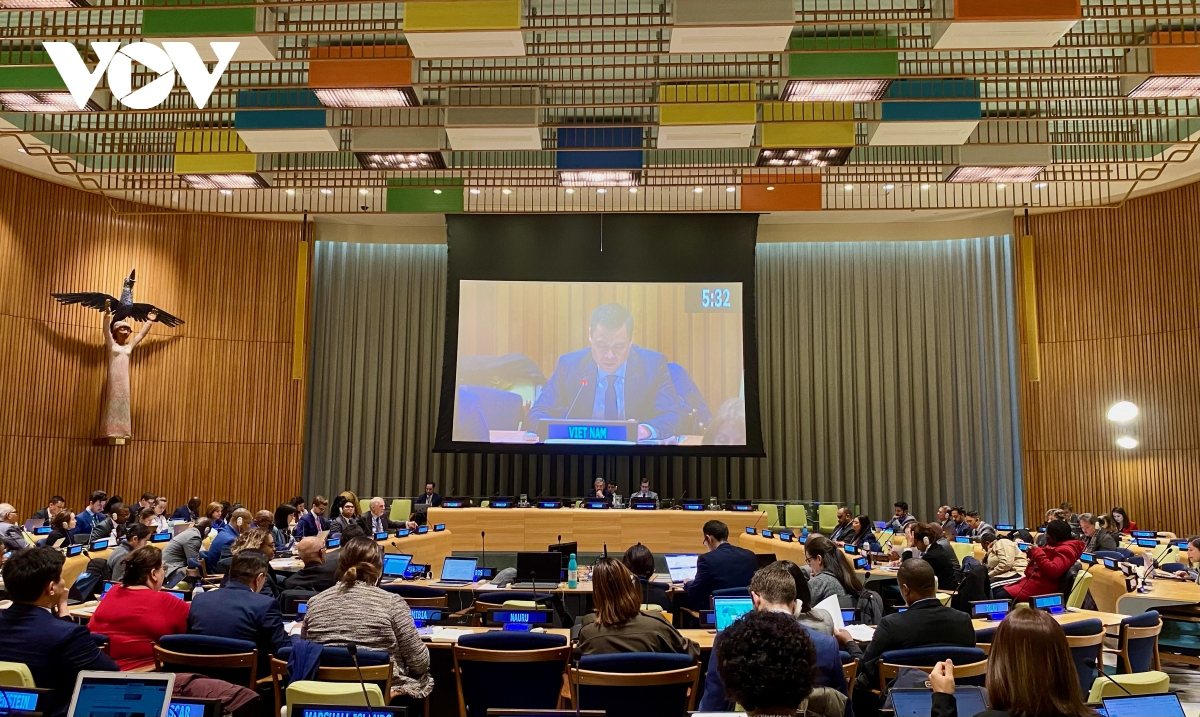
View of the Meeting
To implement the Treaty on the Prohibition of Nuclear Weapons effectively, Ambassador Dang Hoang Giang called on States Parties to fully implement their obligations under the Treaty, and on States not yet party to sign, ratify and accede to the Treaty at an early date, contributing to its universalisation. It is also necessary to continue to highlight the importance of the Treaty on the Prohibition of Nuclear Weapons, raise the international community's general awareness of the consequences of nuclear weapons, and promote international cooperation in capacity building for developing countries. In addition to continuing to promote negotiations on international arrangements on security assurances for non-nuclear-weapon States and the development of a treaty on the cut-off of fissile material, the Ambassador also stressed the importance of nuclear-weapon-free zones for international and regional peace and security. Accordingly, Vietnam welcomes the signature and ratification without reservations by the nuclear-weapon States of the Protocol to the Treaty on the Southeast Asia Nuclear Weapon-Free Zone, in order to contribute to achieving the goal of a world free of nuclear weapons.
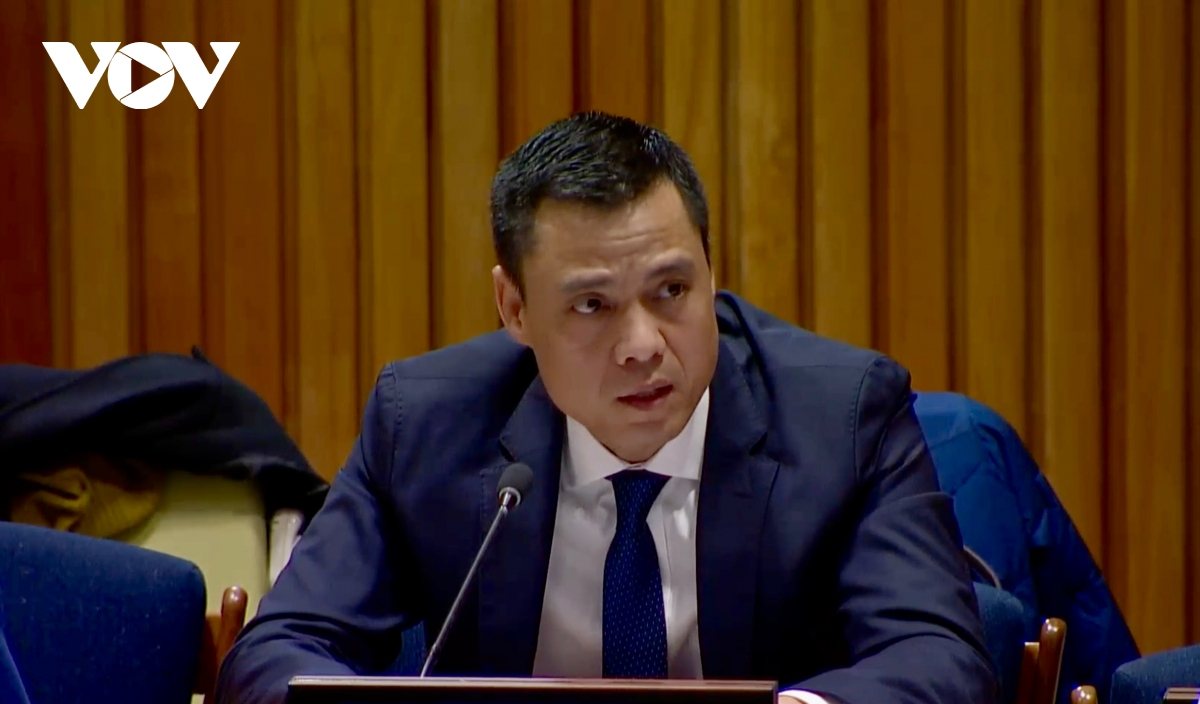
Ambassador Dang Hoang Giang
On this occasion, the Vietnamese Ambassador reaffirmed Vietnam's consistent policy of supporting efforts in non-proliferation and nuclear disarmament towards a world free of nuclear weapons. Vietnam is a party to many important multilateral international treaties in this field and was one of the first 10 countries to ratify the Treaty on the Prohibition of Nuclear Weapons, and it submitted its declaration under Article 2 of the Treaty on time. The Government of Vietnam issued Decree 81 in 2019, establishing an important national legal framework for countering weapons of mass destruction.
The Treaty on the Prohibition of Nuclear Weapons (TPNW) is the first multilateral nuclear disarmament treaty to enter into force since 1990. It is an instrument of great significance which, for the first time in history, establishes comprehensive legally binding obligations on States Parties to completely prohibit the possession, development, stockpiling and use of nuclear weapons. The TPNW officially entered into force on 22 January 2021; 69 States have ratified or acceded to it and 93 States have signed it. The Treaty was adopted at the United Nations conference to negotiate a legally binding instrument to prohibit nuclear weapons, leading towards their total elimination, held in New York (United States) from 15/6-7/7/2017.
Source: vov.vn, VOV correspondent/Washington