Workshop on countering threats from unmanned aircraft systems (UAS) in the proliferation of weapons of mass destruction
Unofficial translation from the Vietnamese original.
In recent years, with the rapid development of science and technology, unmanned aircraft systems (UAS) have been increasingly widely used in many fields such as agriculture, logistics, rescue, surveillance and infrastructure management. However, alongside their practical benefits, unmanned aircraft systems also pose many risks to national security, as they can be exploited to transport hazardous materials or dual-use goods for the proliferation of weapons of mass destruction, or to carry out sabotage. In the face of these challenges, strengthening international cooperation, sharing experience and enhancing response capacity are becoming an urgent requirement for every country.
From 13 to 16 July 2026, in Hanoi, the Chemical Corps – Standing Office of the National Focal Point of Vietnam for countering the proliferation of weapons of mass destruction (Standing Office 81), in coordination with the Export Control and Related Border Security (EXBS) Programme of the US Department of State, organised a workshop on countering threats from unmanned aircraft systems (UAS).
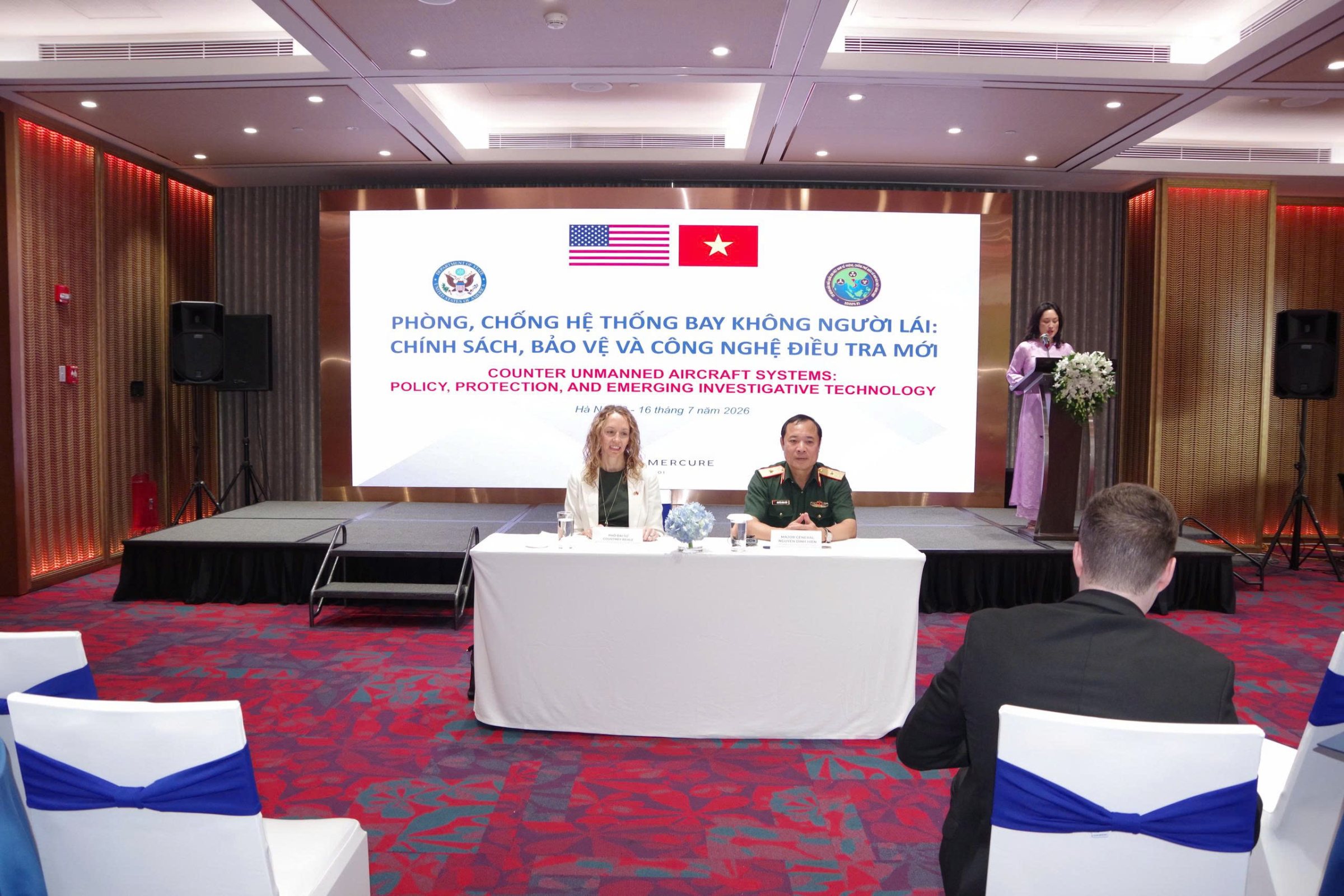
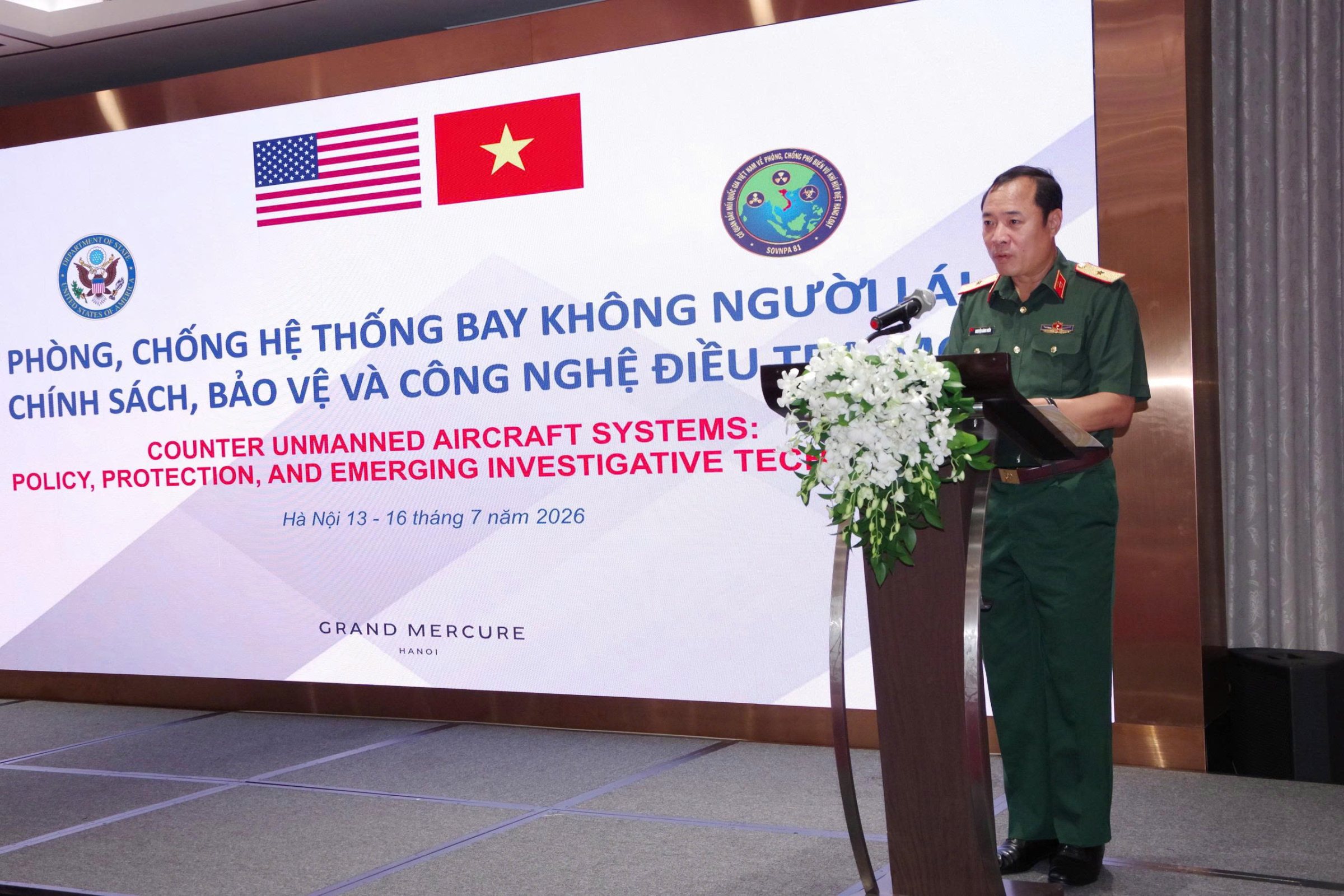
Major General Nguyen Dinh Hien, Commander of the Chemical Corps and Head of Standing Office 81, and Ms Courtney Beale, Deputy Chief of Mission of the US Embassy in Hanoi, deliver the opening remarks.
The workshop was attended by nearly 70 participants from agencies of Vietnamese ministries and sectors and from Indonesia, the Philippines, Malaysia and India. The participation of these agencies, organisations and international partners created a forum for multi-faceted exchanges on emerging security challenges and promoted regional cooperation in preventing and responding to UAS risks.
During the workshop, US experts shared in-depth knowledge on development trends and threats from unmanned aircraft systems; the identification of the risk of UAS being exploited to carry chemical, biological, radiological, nuclear and explosive (CBRNE) agents as well as weapons of mass destruction; technologies and international experience in detecting, investigating and dealing with UAS-related incidents; and solutions to strengthen interagency coordination in order to enhance the effectiveness of prevention and response. In addition to thematic presentations, participants took part in scenario discussions and a tabletop exercise, sharing practical experience and improving their ability to coordinate in handling emerging situations.
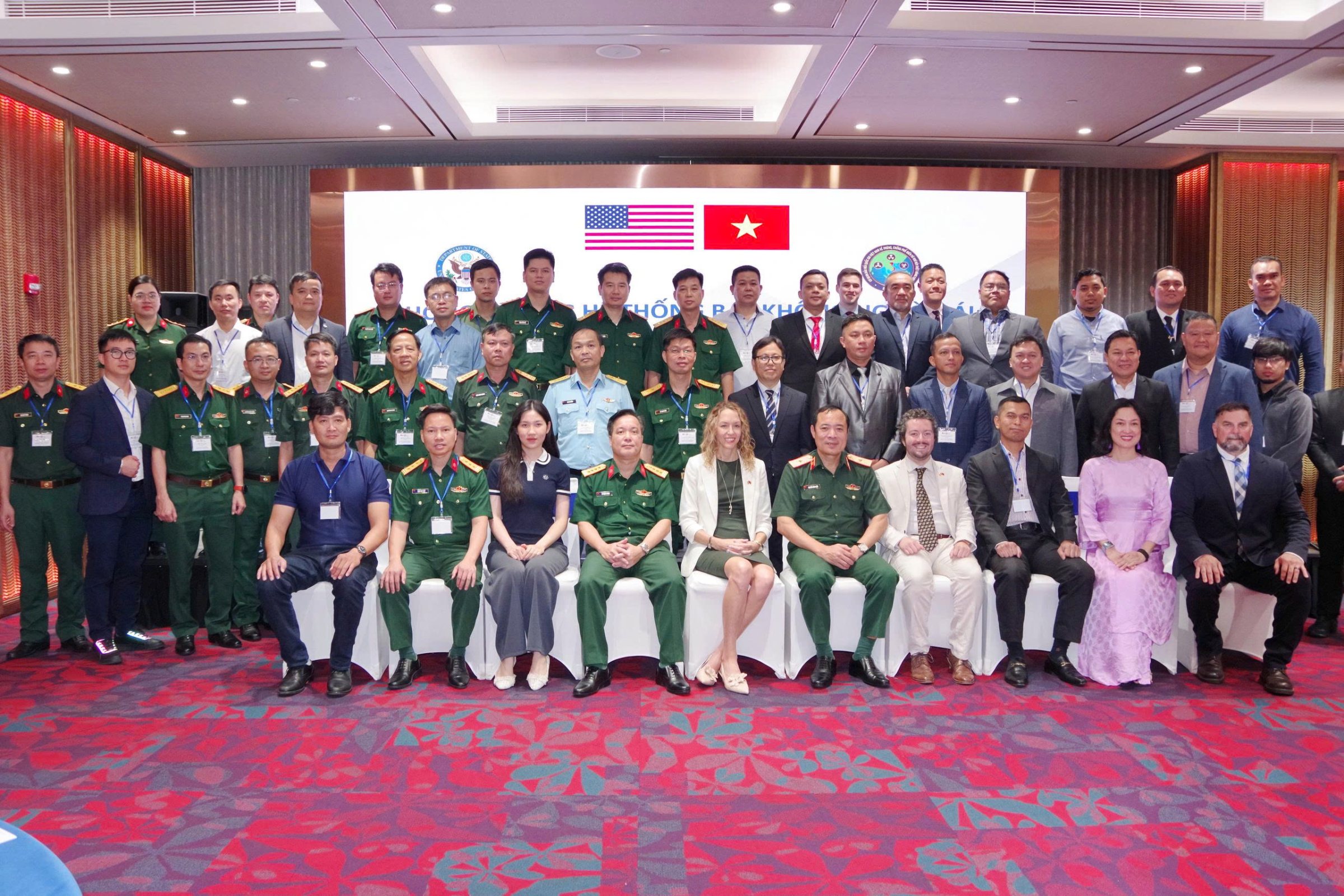
Participants pose for a group photo
The workshop helped raise the awareness and professional capacity of officials in preventing, detecting and responding to threats from unmanned aircraft systems. The knowledge, experience and international practices shared at the workshop will provide an important basis for the competent authorities to study and apply them in a manner suited to Vietnam's circumstances, to continue improving mechanisms and policies, to strengthen interagency coordination and to enhance the effectiveness of countering the proliferation of weapons of mass destruction amid increasing non-traditional security challenges.
Vu Thu Ha - Centre 81